


Building a strong leadership team requires more than just assembling talented individuals. This article compiles practical advice from seasoned executives and organizational leaders who have built and scaled teams through real-world challenges. Their insights cover everything from setting boundaries and delegating authority to fostering accountability and managing the inevitable missteps along the way.
- Let Teams Evolve in Stages
- Nurture Culture Through Shared Growth
- Ask Former Reports Tough Questions
- Build Systems Instead of Hierarchies
- Align Tradeoff Methods Across Departments
- Encourage Dissent Among Executives
- Slow Down and Elevate Others
- Set Targets and Grant Freedom
- Embrace Clarity Over Perfect Answers
- Hire People You Enjoy
- Match Complementary Approaches
- Unite Executives Around Common Goals
- Prioritize Accountability Over Expertise
- Set Negotiables and Nonnegotiables
- Delegate Calls Within Firm Limits
- Expect a Few False Starts
- Assess Scale Fit Promptly
- Codify Processes for Consistent Quality
- Choose Sound Judgment Over Agreement
- Promote People Who Lead
- Define Authority and Invite Candor
- Protect Trust With Firm Boundaries
- Consult Mentors for Blind Spots
- Entrust Responsibility to New Managers
- Respect Diverse Judgment
Let Teams Evolve in Stages
Nobody told me that building a leadership team happens in stages. You don’t hire your dream team on day one. You hire the team you can afford, you grow together, some people hit their ceiling, some leave, and you hire the next team. Then you do it again.
I spent years feeling like I was failing because my team wasn’t the team I imagined. I’d look at companies further along and think: why don’t I have leaders like that? The answer was simple. They’d been through three or four iterations. I was still on my first.
That would have saved me a lot of frustration. Teams evolve. You trade up. Some of your best early hires won’t be the right fit when you 3x in size. That’s not a failure. That’s how it works.
The biggest lesson I’ve learned along the way:
The hardest part of leadership isn’t strategy, hiring, or setting goals. It’s holding the tension between control and empowerment.
Early on, I swung hard toward control. High standards, tight oversight, clear expectations. Results were good. But I burned people out and didn’t even realize it. I thought I was being a strong leader. I was actually being a bottleneck.
So I swung the other way. More freedom, less oversight, let people figure it out. And then I was frustrated when deadlines slipped and accountability disappeared.
The lesson is that empowerment without structure creates chaos. Structure without empowerment creates compliance. You need both, and finding the balance is the actual work of leadership.
What helped me was a simple framework. I think of my team on a spectrum: controlled, managed, coached, empowered. New people start closer to controlled, where I’m explicit about how things should be done. As they build skill and judgment, I deliberately move them toward empowered, where they own outcomes and I stay out of the way.
The mistake I made for years was treating everyone the same. I’d give a new hire the same freedom as a five-year veteran, then wonder why they struggled. Or I’d micromanage someone who’d earned autonomy and watch them disengage.
The work isn’t picking a leadership style. It’s reading where each person is and adjusting accordingly.

Fahd Alhattab, Founder & Leadership Development Speaker, Unicorn Labs
Nurture Culture Through Shared Growth
The advice I wish someone had given me early on is this: build the culture before you need it. Don’t wait for a crisis to define your values. Don’t wait for a conflict to establish how you will listen to each other. The culture of a team is built in the ordinary moments, the Wednesday meetings, the daily planning hours, the small conversations in the corridor. Those moments either add up to something or they don’t. And by the time you need them to hold under pressure, it’s too late to start building.
When I founded L’Atelier, I had a very clear vision of what the school should be. What I didn’t fully understand yet was that a vision only travels as far as the people carrying it. And people carry a vision differently depending on whether they helped construct it or simply received it. That distinction took me years to fully internalize.
The biggest lesson I’ve learned across 30 years is that you cannot separate the growth of the institution from the growth of the people inside it. They are the same thing. Teachers at L’Atelier stay for 15, 18, 23 years not because we offer the best salary in Miami. They stay because they feel that their thinking genuinely matters, that they are building something alongside me rather than executing something for me. Ana Pineda has been with us for over 25 years. Isabel Coles for over 23. Amanda Rodriguez for over 15. That continuity is not accidental. It is the result of years of genuine investment in people as thinkers, not just as employees.
What I would tell any leader starting out is this: find the people who want to learn how to learn, not just people who already know how to do the job. The ones who are curious about their own thinking, who can sit with a question without rushing to an answer, who want to understand why before they decide what: those are the people who will grow with you. And growing together, over a long time, is the only way to build something that actually lasts.

Simonetta Cittadini, Founder and Director, L’Atelier School
Ask Former Reports Tough Questions
The leadership hires I got wrong, I got wrong in the reference calls. We’d take the three names the candidate handed us, have a pleasant twenty minutes with each, and file it as diligence. Those calls are a formality. The people who actually know are the ones who reported to the candidate, and they’re never on the list.
Spend the extra week finding two former direct reports and ask them one thing: what did this person own that broke, and what did they do about it? Across Interseller and now Pin, that question has caught more than any structured interview loop we’ve run. It’s also why a couple of hires I liked a lot didn’t happen, which I’m still not fully at peace with.

Steven Lu, CEO, Pin.com
Build Systems Instead of Hierarchies
I’m Runbo Li, co-founder and CEO of Magic Hour. Here’s the honest truth: don’t build a leadership team. Build a leadership system.
When David and I started Magic Hour, the default advice from everyone was “hire fast, build out your org chart, get directors in place.” We ignored all of it. Instead, we asked a different question: what if two people with the right systems could outperform a team of twenty? That bet paid off. We’ve scaled to millions of users as a two-person company by treating AI as our leadership layer, not just a tool.
The biggest lesson I’ve learned is what I call “the delegation trap.” Early-stage founders get told to delegate everything they’re not world-class at. But delegation without leverage is just overhead. I watched friends raise seed rounds, immediately hire six people, and then spend 80% of their time managing instead of building. Their burn rate tripled. Their speed halved. They became middle managers of their own startups.
The real unlock was realizing that before you add a human to your team, you should ask: can a system do this at 90% quality with zero management cost? At Magic Hour, AI handles our customer support triage, chunks of our marketing pipeline, code review, and data analysis. The “team” I lead is mostly automated workflows that I architect once and iterate on weekly.
Now, when we do bring humans in, the bar is completely different. We’re not hiring people to fill seats on an org chart. We’re hiring people who can build and manage their own AI-powered systems. That’s the new leadership competency. Not “can you manage five direct reports.” It’s “can you architect a system that replaces five direct reports.”
If I could go back and tell myself one thing, it would be this: the best leadership team you’ll ever build is the one that doesn’t need to exist.

Runbo Li, CEO, Magic Hour AI
Align Tradeoff Methods Across Departments
The advice I wish someone had given me early: stop hiring leaders for skill gaps and start hiring for decision-making style. When I first built out delivery leadership across our engineering org, I picked the strongest specialist in each area — and quickly learned that a leadership team isn’t a stack of experts; it’s a group that has to agree on how to make trade-offs under pressure without escalating every call to the top. Two excellent leads who resolve conflict in completely different ways will slow a large delivery organization down more than one average leader with a consistent approach.
The biggest lesson in scaling teams across multiple countries and time zones: a process only survives contact with reality if the people running it helped design it. Early on, we rolled out standardized delivery frameworks top-down, and adoption stayed shallow — teams followed the letter of it, not the intent. What actually stuck was building those same frameworks with the leads who’d be accountable for them. Ownership, not authority, is what makes a leadership team actually lead.

Marina Portna, CEO & Founder, Job Advice Agency
Encourage Dissent Among Executives
I wish somebody had told me that promoting your best worker is a decision to lose your best worker. It is often still the right call, but nobody warns you about the cost, so you are surprised when output dips and you quietly start blaming the person. Budget for that dip before you make the offer.
The bigger lesson took me longer. A leadership team’s job is to disagree with you in front of each other. If everyone in the room agrees with the founder, you do not have a leadership team, you have a very expensive group of assistants. I built that problem myself for a while by rewarding speed and treating pushback as friction. Now I try to make the first objection cheap. Ask who thinks this is wrong before you say what you think, because once you have stated a position out loud, nobody senior is going to volunteer that it is a bad one. The room goes quiet and you mistake the silence for alignment.

Raphael Larouche, CEO, Renaissance SEO
Slow Down and Elevate Others
One piece of advice I wish I’d learned earlier was to slow down. Our schedules get busier when we step into leadership roles. The responsibilities and scope increase. We now have more on our plate and less time to accomplish it all. When this happens, our first instinct is to speed up to catch up. This is the exact opposite of what we should do. Leading teams requires more strategic thinking. The best way to navigate an increased workload is to slow down and zoom out. Tap into critical thinking skills and separate what’s urgent and important from what’s not urgent and important. Determine what needs to be done now, what can wait, what someone else can take on, and what needs to be an absolute “no.” Fight the urge to move faster and lean into the pause.
The biggest lesson I’ve learned along the way in leading teams is that you are no longer the star of the show. Your team is the star. Your role as the leader is to lift them up and shine the light on their strengths.

Jennifer Recla, Leadership Coach & Consultant, Recla Coaching & Consulting
Set Targets and Grant Freedom
I wish someone had told me earlier that coaching and managing are different jobs and that I’m only good at one of them. My instinct is to motivate and give people room. That works beautifully with the right person, and it’s a disaster with the wrong one, because room without judgment just delays a decision everybody can already see coming.
The biggest lesson is that clear direction is a kindness. Early on, I thought giving people latitude meant staying light on specifics. It doesn’t. People want to know exactly where they stand and exactly what the target is. The freedom belongs in how they get there, not in whether they understood the assignment.
The other thing I’d say is to weigh how long you’ve actually watched someone work. My president and I met on a football team and built our first fundraiser together 25 years ago. I don’t think an interview process gets you to that.
Hire people you’d want beside you in a hard week, tell them the truth, and let them play.

Scott Shirley, Founder & CEO, Pledge It
Embrace Clarity Over Perfect Answers
The piece of advice I wish I had received early on is that there is no secret manual for executive leadership, and looking for one only feeds imposter syndrome. When I first stepped up to become CEO at Startmate in 2018, the very first thing I did was literally Google what a CEO actually does. I understood how to execute as a Head of Operations, but leading an entire organization felt like it required a playbook I was missing. I wish someone had told me that building a leadership team is not about finding people who already have all the answers. It is simply about establishing extreme clarity on what you want and having the patience to construct your systems piece by piece.
The biggest lesson I have learned since then is that the smartest teams are often the worst at adapting to rapid shifts. Highly intelligent leaders frequently get stuck in the perfectionism trap, trying to design flawless, theoretical strategies instead of getting their hands dirty with practical execution. Today, this fundamentally changes how you should scale an organization. You no longer need a massive leadership team to manage complex infrastructure. You just need a small, highly competent core of people who bypass the perfectionism trap, deeply understand their own operations, and are willing to learn alongside the build rather than outsourcing their execution blindly.

Michael Batko, CEO, Hourglass AI
Hire People You Enjoy
I wish I had been told earlier that building a leadership team is less about finding people who have the skills and more about hiring strong and talented people you enjoy being surrounded with. If you enjoy the people you work with, you’ll enjoy work. Work will not be work, and the conversations will be more honest and authentic between the team. At Tipsy Putt, I love the people I’ve surrounded myself with. They have far more experience than I do; however, it’s not the experience that makes it great, it’s the fun we have when we’re all together. If you build a team like this, the culture becomes extremely strong. Other team members see the enjoyment everyone has, and it reflects all the way down the line. Hire the people you want to be around because you’ll be spending a lot of time together.

Brandon Robinson, FOUNDER / CEO, Tipsy Putt
Match Complementary Approaches
Early on, I wish someone had told me not to optimize for impressive people, optimize for complementary operating systems. Founders often build a leadership team by hiring people who look strong individually, then act surprised when the group moves slower, duplicates work, or debates everything to death.
The biggest lesson for me has been that clarity of role is not enough. You also need clarity of decision rights, communication style, and what kind of environment lets each leader do their best work. A great operator in a chaotic zero-to-one phase is not always the same person who thrives once the company gets more process-heavy.
At Pigment, the best leadership hires have been the ones who know how they work and can say it plainly. The wrong hire usually shows up as friction first, not incompetence. If adding a senior hire makes the room more political or more confused, that is the signal to pay attention to.

Kenneth Shen, CEO, Founder, Pigment
Unite Executives Around Common Goals
The advice I wish I had been given is that hiring senior people does not reduce your workload in the way you imagine. It changes the work rather than removing it. You stop doing the task and start being responsible for context, for making sure the person has enough of the picture to make good calls without you. If you skip that part, you end up either approving everything yourself, which defeats the purpose, or being surprised by decisions you would have made differently. Neither is the new hire’s fault.
The bigger lesson is that a leadership team is not a group of individual reports. Most of the value is in how they work with each other, and that only happens if they are genuinely solving the same problem rather than defending their own areas. I have learned to pay attention to whether someone raises an issue that sits in a colleague’s territory. When people do that comfortably, the team is working. When everyone stays neatly inside their own lane, you have a set of managers rather than a leadership team.

Paul Sharpe, CEO, Easy Business App
Prioritize Accountability Over Expertise
I wish someone had told me earlier that the best leadership team isn’t made up of the smartest people in the room; it’s made up of people who can own decisions without constantly kicking them back up to you. Early on, it’s tempting to hire impressive resumes and assume leadership will naturally follow. What matters more is judgment, accountability, and whether someone can move things forward when the answer isn’t obvious. The biggest lesson I’ve learned is that a weak leader creates hidden drag everywhere—more meetings, more ambiguity, more founder involvement, more second-guessing. A strong leader does the opposite: they make the whole organization feel lighter. So I’d tell founders to hire for ownership first, expertise second, and charisma a distant third.

Justin Belmont, Founder & CEO, Prose
Set Negotiables and Nonnegotiables
Create a list of negotiables and non-negotiables prior to building the team. There needs to be a healthy balance between recruiting the most competent talent in the market and leveraging personalities that can navigate uncharted territory with grace. There will be more uncertain times that challenge one’s decision-making and coping skills than convenient days when anyone can function with ease. It’s important not to fall prey to tunnel vision, where most of the recruits are versions of yourselves. It’s important that members are able to complement one another’s strengths and weaknesses. Sometimes the leadership team’s overall strength doesn’t reside in numbers, as in headcount, but in how well each member conveys their mission with clarity and strong business execution.

Sasha Laghonh, Founder & Sr. Advisor to C-Suite & Entrepreneurs, Sasha Talks
Delegate Calls Within Firm Limits
Write down the specific decisions you’re handing over before the person starts, and put a limit on each one. My earliest leadership hires got a title and a broad mandate, and every real call still routed back to me. They weren’t underperforming. I’d never told them what they were allowed to decide without checking.
What fixed it was boring. I kept a plain list of the decisions that came up over and over in the business, marked which ones were mine and which ones were theirs, and attached a spending limit and a risk boundary to the ones I gave away. Anything inside that boundary, they closed. Anything outside it came to me.
Running group sourcing trips overseas made the cost of skipping that step obvious. Decisions come at you constantly on the ground, and I’m often somewhere with terrible reception. If the people running things with me had to wait on my approval, everything stalled and my nights turned into a backlog of messages I should never have been reading.
Building products mostly on my own now, with AI covering a lot of what used to need a headcount, I only add a leader when a decision needs human judgment every day. If it doesn’t, I’m looking at a process problem, and hiring a manager just gives that problem a salary.

Will Mitchell, Founder, StartupBros
Expect a Few False Starts
I wish someone told me not to rush it and to expect to try a few people before you find the right one. There is enormous pressure to make the perfect hire and to make it fast, and that pressure is exactly what pushes you into a yes you aren’t sure about. I heard once that even the biggest hiring organizations in the world run somewhere around a 25 percent success rate. If that’s the reality for companies with entire teams and budgets devoted to hiring, it was never realistic for me to expect to be right on the first try. Knowing that earlier would have saved me a lot of second-guessing.

Makena Finger Zannini, CEO, The Boutique COO
Assess Scale Fit Promptly
No one ever mentioned to me that a fantastic senior hire can completely fall apart due to timing alone. When I hired a senior product leader, the initial logic was straightforward: he had successfully run the function at a company four times the size, so he’d replicate that experience at our smaller scale. Unfortunately, that isn’t how it works.
People with deeply ingrained operating experience and expectations arrive assuming pre-existing infrastructure: a formal budgeting process, dedicated data support, and a layer of staff to implement directives.
None of this was in place, yet it’s disingenuous to ask someone with eight years of functioning within an established system to be the person to construct that system from scratch. The questions I wish I’d asked back then: during the first month on the job, and facing no one available for delegation, what specific actions would you take? And don’t give me a hypothetical; walk me through your real first week. The latter, larger lesson has taken time to digest.
Typically, when a leadership hire isn’t succeeding, the response is to provide assistance: offering more information, allocating additional time, bringing in a coach, clarifying expectations.
On two occasions, I attempted exactly this. Both instances simply extended what was initially a six-month problem to a fourteen-month one, at an immeasurable cost to the team. Support may address a skill deficiency; it cannot compensate for a stage mismatch, and the ability to quickly identify that imbalance is at the heart of effective leadership recruitment.

Abhishek Shah, Founder, Testlify
Codify Processes for Consistent Quality
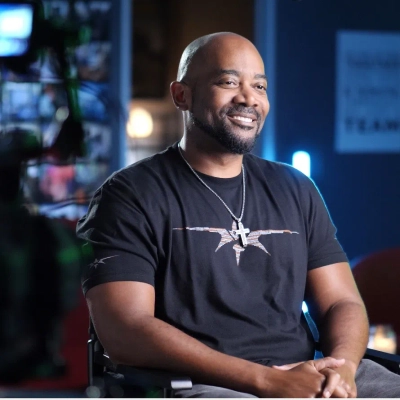
One piece of advice I wish I had received was to invest in repeatable systems and clear standards from the very beginning. Early on, hustle and individual talent can cover gaps, but those approaches break down as a company grows. The biggest lesson I learned is that talent matters, but systems create consistency and protect client trust. Clear roles, documented processes, and measurable standards reduce reliance on exceptional individual effort. Building those systems also makes communication and follow-through routine rather than sporadic. Taking the time to codify how work gets done preserved quality and helped our leadership team scale responsibly.
Tavares Beverly, Founder and CEO, Beverly Boy Productions
Choose Sound Judgment Over Agreement
The advice I wish I had received early is that building a leadership team is not about finding people who execute well. Execution is visible once a situation is clear. Leadership is tested when the situation is not clear, and what you are actually selecting for is whose judgment you trust under that uncertainty. The biggest lesson, shaped by leading teams at scale and by failing more than once as a founder, is that I used to mistake agreement with me for fit on the team. That mistake stays hidden until scale exposes it, because scaling reveals weak decision-making faster than it produces good decision-making. What I look for now is judgment I can examine, not agreement I can collect, reasoning that corrects itself when proven wrong. A failure earns its cost back only when it becomes a rule you reuse.

MING-YUAN XIE, Serial Entrepreneur & Founder of Meow Universe, Meow Universe
Promote People Who Lead
We promoted our first 3 team leads off the strength of their own work, which is the obvious move and mostly the wrong one. We have been fully remote since the start, about 60 people now, so a lead who is good at the craft is not automatically visible to anybody else. The advice I wanted was to check whether a person actually enjoys the boring half of the job. Reviewing somebody else’s work. Sitting in a call where nothing gets built. 2 of the 3 hated it inside 6 months and went back to building.
The bigger lesson took longer. You cannot fix a wrong leadership pick with more clarity about the role, which is what I kept reaching for. Other people running companies our size still promote on output, then call the result a culture problem.

Sahil Agrawal, Founder, Head of Marketing, Qubit Capital
Define Authority and Invite Candor
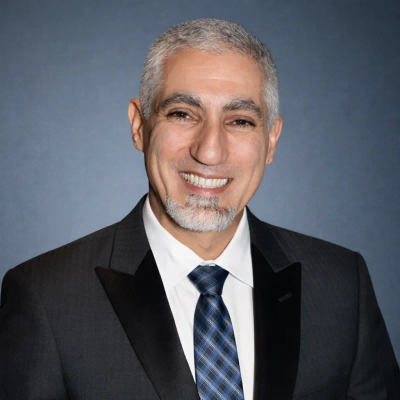
I wish someone had told me that building a leadership team is not about collecting the smartest people in the room. It is about choosing people who think differently, speak honestly and can make decisions without protecting their own department.
Earlier in my career, I paid too much attention to technical ability. That matters, especially in R&D, but expertise alone does not make someone a strong leader. I have seen highly capable people slow down a team because they avoided difficult conversations, held onto decisions too long or treated disagreement as disloyalty.
The biggest lesson I have learned is that trust needs structure. Everyone should know what they own, where their authority ends and when a decision must move to someone else. I also want leaders to challenge my thinking before a decision is made. Afterward, we leave the room aligned and carry it out together.
A leadership team does not need constant agreement. It needs enough honesty to disagree early, enough clarity to decide, and enough maturity to move forward without resentment.
Vardan Ter-Antonyan, Founder and Managing Principal, Ter-Antonyan Consulting LLC
Protect Trust With Firm Boundaries
One lesson I learned the hard way is that trust and generosity still need boundaries. Early on, I hired a nurse practitioner with the hope that she could eventually grow into a true leadership role and possibly become a partner, so I invested heavily in her development. I trained her closely, helped build her patient schedule, marketed her, and paid for high-level education and travel because I genuinely wanted to see her succeed. She ultimately left after less than a year of full-time equivalent work to build something of her own, and that experience forced me to look at leadership very differently. I realized that treating someone like a future partner before the expectations, protections, and commitments are clearly defined can create a lot of risk for the business. If I could give my younger self one piece of advice, it would be to set boundaries early, put important expectations in writing, and plan for the worst-case scenario even when you trust someone. Now I believe generosity and mentorship are still important, but they should be supported by clear contracts, repayment terms for major training investments, and a structure that protects both the employee and the company.

Jing Castro, Founder, Blue Sky Laser & Tox
Consult Mentors for Blind Spots
I wish someone had told me to bring external perspective in from the start by working with mentors or a coach rather than assuming I could see every blind spot myself. The biggest lesson I learned is that outside voices expose assumptions formed by upbringing and habit and help you make better decisions faster. Inviting candid feedback changed how I hire, delegate, and structure leadership roles. Now I routinely seek mentors and peers to challenge our thinking before we scale.

Ronan Leonard, Founder, Intelligent Resourcing
Entrust Responsibility to New Managers
One piece of advice I wish I had received earlier is that a leadership team does not begin when everyone is perfect. It begins when people are trusted with real ownership.
As a founder, it is tempting to keep every important decision close because you know you can do it better. I had to learn that if I do everything myself at 100 percent, the business still only has one person’s capacity.
At Packur, I try to give people ownership of parts of the customer journey: quote clarity, artwork handoff, delivery questions, or production coordination. They may not do it exactly the way I would at first, but the business becomes stronger when knowledge is not trapped in the founder’s head.
The lesson is that leadership grows through responsibility, not observation.

Vance Wenn, Founder, Packur
Respect Diverse Judgment
I wish someone had told me that the people you trust to lead do not have to approach everything the way you would.
Zeva grew out of my own experience of hair loss after cancer treatment, so the work is very personal to me. That gives me a particular perspective, but it cannot be the only perspective the business makes room for.
I see that in our team. Alice has her own experience with trichotillomania, while Chris brings more than twenty years of practical experience and a background in psychology. They each bring something to a client conversation that I cannot simply teach them from my own experience. That is something I would tell a founder to look for when building a leadership team: people whose judgment you respect, including when it differs from yours.
The difficult part is what happens next. If you ask someone to take responsibility, then keep correcting every small decision because you would have handled it differently, they will eventually just wait for your answer. I think that is an easy habit to slip into when you care deeply about the business.
My biggest lesson is to be clearer about what actually needs protecting. For me, that means sound professional judgment, honest advice and treating clients with sensitivity. There should be room for different personalities and ways of working within that. Before stepping in, I would ask: is something important being missed, or is this simply different from how I would do it?

Brenda Leung, Founder, Zeva HAIR SPA