
Strong leadership teams don’t happen by accident — they’re built through intentional design, clear structure, and disciplined execution. This article compiles practical strategies from executives and organizational experts who have successfully assembled and scaled high-performing teams. From defining roles before hiring to establishing ground rules that turn debate into action, these lessons provide a roadmap for leaders ready to transform their top teams.
- Grow Stewards From Within
- Prioritize Relationships And Character
- Promote Coaches Over Solo Stars
- Turn Debate Into Decisive Progress
- Define Domains Before You Hire
- Lock In Goals Roles And Norms
- Treat Alignment As Core Infrastructure
- Favor Aptitude And Attitude
- Assign Outcomes To Single Owners
- Set Ground Rules Early
- Spell Out Expectations And Authority
- Make The Implicit Explicit
- Engineer Shared Direction From Day One
- Guide From The Front
- Assess Interactions And Receptiveness
- Install EOS With Outside Support
- Assemble A Complementary Bench Of Experts
- Lead With A Unified Vision
Grow Stewards From Within
The most valuable lesson I’ve learned is that exceptional teams are grown, not bought. You build high-performing leadership by starting with people at very junior positions and developing them within your organization.
Many founders rush to headhunt experienced executives early on. I believe headhunting has its place at certain stages, but before that, you need to build a team that’s truly aligned with your company’s vision. And that alignment comes from growing people from the ground up.
We hired interns to help us create our brand and drive innovation. We chose passionate individuals who wanted to build something new for social impact. We introduced them to real challenges, from developing our digital school concept to creating the country’s first AI-powered parenting platform.
Today, every single brand lead started as one of those interns. They’ve been with us since 2013, when we were just piloting our first projects. That decade of shared growth created leaders who don’t just understand our mission; they helped shape it.
My advice for anyone starting to build their team: hire for passion and mission alignment over credentials. Look for people who genuinely want to build what you’re building. Skills can be taught. True commitment cannot. Give your junior team members meaningful work from day one. Let them tackle real challenges and see how their contributions make an impact. That’s how they grow into leaders.
Be patient. Developing leadership takes time, but the result is a team with deep knowledge of your business, cultural alignment, and genuine investment in your success. Save headhunting for later, when you need specific expertise you can’t develop quickly enough internally. By then, you’ll have a strong core team that can help integrate those senior hires into your culture.
The leaders you grow from within don’t just work for your company. They build it with you. And that makes all the difference.

Prioritize Relationships And Character
The root of high-performing teams isn’t stacks of degrees or never-ending lists of KPIs; it’s relationships. When we prioritize building relationships with each other, we build trust and understanding, which leads to real business results. Those results show up as improved employee retention, customer satisfaction, and profit margins.
Trust is built over time primarily through open and respectful discussion, seeing how others react or respond to the ideas we share. Our professional relationships should start with a low level of vulnerability, sharing mostly surface-level common human experiences. As trust is built, we can then more safely start to share deeper truths, such as how we felt during a tense meeting, or express a concern about a project that’s behind schedule. It takes both time and positive interactions where we feel seen, heard, and safe sharing ideas.
Why does this matter at work? Sharing innovative and creative solutions for work problems is vulnerable. Without relationships between team members, great ideas are never said out loud. When people don’t speak up, we lose out on improvements that impact our decision quality, efficiency and effectiveness metrics.
When I’m building leadership teams, I am more interested in personal character than a pages-long resume. I like to ask questions like, “Tell me about a time you supported a colleague,” and, “What does kindness in the workplace look like for you?”
Business success is determined by the extent to which we can meaningfully collaborate to define and solve problems together. Build a team with strong character, and success is sure to follow.

Promote Coaches Over Solo Stars
One of the most valuable lessons I’ve learned about building high-performing leadership teams is that the best leaders aren’t always the highest individual performers. It’s tempting to promote the person who executes at the highest level, but leadership is far less about doing the work and far more about helping others do their best work.
The first thing I look for in potential leaders is a genuine desire to support and elevate others, similar to a coaching mindset. Strong leadership candidates care about the greater good of the team and the organization, not just their own performance. They take pride in collective success, collaborate naturally, and tend to be people others gravitate toward. Simply put, they’re strong team players before they’re strong leaders.
Once those individuals are identified, the role of the leader shifts dramatically. Your job is no longer to have all the right answers; it’s to ask better questions. Great leadership teams thrive when creativity, new ideas, and ownership are encouraged rather than stifled. Asking thoughtful, open-ended questions creates space for people to contribute meaningfully and feel a true sense of ownership at the table.
The final piece is accountability. Not in a heavy-handed or punitive way, but through consistent follow-up and reflection. When priorities and initiatives are set, effective leaders regularly revisit them, measure progress, and ask what’s working, what’s not, and what needs to change. Accountability, paired with trust and curiosity, keeps leadership teams aligned and moving forward.
While this approach is simple in theory, it takes discipline in practice, especially when it comes to asking questions instead of giving answers. But in my experience, this shift is foundational to building leadership teams that are engaged, empowered, and high-performing.

Turn Debate Into Decisive Progress
I used to wonder why a team filled with strong leaders could still feel misaligned. Over time, it became clear that talent was not the constraint. Shared clarity was.
Early on, I built teams around expertise. Now I build them around alignment. We treat conflict as part of the process rather than something to avoid. Debates happen fast. Decisions are written down. Egos stay out of it. Weekly one-pagers replaced long meetings, which helps issues surface early and keeps discussions focused on outcomes instead of personalities.
Each leader also owns a single verb that defines their impact. Build. Close. Retain. Grow. Once that ownership is explicit, collaboration stops feeling like negotiation and starts to feel like flow.
High performance does not come from everyone agreeing all the time. It comes from making disagreement useful, then moving forward together without hesitation.

Define Domains Before You Hire
The most valuable lesson I’ve learned about building high-performing leadership teams is that performance comes from clarity and ownership, not from hierarchy or titles.
Early on, I thought leadership meant having the most experience or the strongest opinions in the room. What I’ve learned instead is that teams perform best when everyone clearly owns a domain and knows how success is measured. When responsibility is vague, decisions slow down and accountability disappears. When ownership is clear, execution speeds up.
We focus less on resumes and more on potential and initiative. We give people real responsibility early and trust them to figure things out. That trust creates leaders naturally, because people grow into the problems they own.
My advice to someone building their first leadership team is simple: design the system before you pick the people. Decide how decisions will be made, how progress will be measured, and who owns what. Then hire people who are comfortable with accountability.
A strong leadership team isn’t built by control; it’s built by clarity.
Lock In Goals Roles And Norms
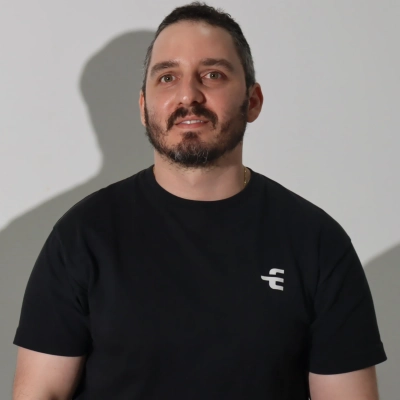
Here’s a hard-earned lesson from building high-performing leadership teams, along with concrete advice for anyone assembling their first one.
1. The biggest lesson: Commitments to goals, roles, and norms beat talent alone.
Across agency teams, remote leadership teams for multiple seven-figure SaaS companies, and scaling to thousands of assets, the clearest pattern I’ve seen is this: early, explicit commitments to goals, roles, and operating norms set the foundation for high performance.
On paper, assembling smart people should be enough. In reality, it isn’t — unless those people align on three things: what we’re trying to achieve, who owns what, and how we work together. Without shared answers to those questions, teams don’t move as one, regardless of individual talent.
This isn’t a one-time alignment issue. Teams drift. Assumptions fade. Consensus evolves unevenly. Our leadership team runs quarterly “3X3s,” revisiting three areas: North Star goals, assigned core responsibilities, and operating norms. These reviews surface small frictions — unclear ownership or outdated norms — before they turn into misalignment. Simply removing rework and confusion cut our cycle time for complex client work by nearly 33%, from an average of 65 workdays to under 45.
2. What I recommend for building your first leadership team.
Have explicit conversations about goals, roles, and norms — and document them. Written commitments, templates, and shared references matter. Avoid leaving room for “we assumed you knew.”
Senior leaders often resist these conversations unless the CEO actively facilitates them. Without structure, they default to assumptions whenever responsibilities overlap. When advising leadership teams, I pair alignment discussions with practical tools: goal summaries, role clarity cards, decision references, scripts for difficult 1:1s, and lightweight dashboards that keep commitments visible.
For CEOs, taking this calibration seriously pays off. Beyond my own experience, McKinsey research shows teams with strong clarity around goals and roles outperform peers on productivity and retention. A few hours of foundational alignment compound for years — far beyond what raw speed or star performers can deliver.

Treat Alignment As Core Infrastructure
The most valuable lesson I’ve learned about building high-performing leadership teams is that alignment compounds faster than velocity. In complex environments, moving quickly without shared understanding creates drag, not progress. Teams perform best when decision rights, accountability, and priorities are explicit from the start.
In my own work building AI visibility and digital authority, I’ve seen how misalignment shows up immediately at scale. When leadership teams are unclear or inconsistent, that confusion is amplified across systems, platforms, and AI surfaces. Conversely, when leaders share a clear narrative and operating model, execution accelerates because decisions travel cleanly through the organization.
For someone starting to build their own team, my advice is to hire for judgment and signal awareness, not just functional skill. Look for leaders who understand how their decisions ripple beyond their immediate role. Invest early in clarity around ownership, escalation, and values. In enterprise contexts especially, alignment is not a soft skill. It is infrastructure. When it’s strong, performance follows.

Favor Aptitude And Attitude
The most valuable lesson I’ve learned about building high-performing leadership teams is that resumes don’t build performance. Aptitude and attitude do.
I select people based on two criteria. First, aptitude: the ability to think logically, recognize patterns, and apply sound judgment in ambiguous or fast-moving environments. Second, attitude: earnestness, curiosity, and a willingness to take responsibility. In complex, cross-cultural, or resource-constrained settings, those traits matter far more than formal credentials or linear experience.
Some of the strongest teams I’ve led were not necessarily the most “qualified” on paper. They were composed of people who were deeply engaged, intellectually capable, and self-motivated to figure things out together. With the right structure, clarity, and support, smart and curious people can learn systems quickly and outperform more experienced teams that are rigid or disengaged.
For someone starting to build their own team, my advice is simple: hire for thinking and learning velocity, rather than pedigree. Design roles around individual strengths and avoid forcing people into boxes. Provide clear context, decision authority, and create accountability through transparency. High performance emerges when learning and sound judgment are rewarded over certainty, and capable people are trusted to think through problems and take ownership.

Assign Outcomes To Single Owners
The most valuable lesson I’ve learned is that high-performing leadership teams are built on clarity, not talent alone. Early on, I assumed strong individual performers would naturally function well together. In reality, performance only scales when roles, decision boundaries, and accountability are clearly defined.
We saw better outcomes once leadership roles were tied to ownership, not just titles. Each leader is responsible for a specific outcome such as client retention, delivery quality, or team development. This reduced overlap, prevented silent conflicts, and improved decision speed.
Another key lesson is alignment on values. Skills can be trained, but misaligned values quietly damage teams over time. We prioritize leaders who communicate honestly, handle pressure without blame, and protect long-term client trust even when it is inconvenient.
My advice to someone building their first leadership team is to slow down at the start. Hire for judgment and accountability before experience. Set expectations early, document decision rights, and encourage healthy disagreement. A small leadership team with trust and clarity will outperform a larger team built only on resumes.

Set Ground Rules Early
The most valuable lesson I’ve learned is that leadership teams don’t perform well simply because they’re capable; they perform well when trust, healthy challenge, commitment, accountability, and shared results are deliberately built. Those elements don’t appear on their own; they require clear norms, open dialogue, and visible follow-through.
For anyone starting to build a leadership team, my advice is to define the “how” as clearly as the “what” from day one: how the team will operate, how decisions are made, how conflict is handled, and how accountability shows up before assuming alignment will emerge on its own.
When leaders know how they’re expected to work together, trust builds faster, performance accelerates and friction drops.

Spell Out Expectations And Authority
Clarity beats charisma every time. When I started my first business 17 years ago, I made the mistake of assuming talented, motivated people would naturally align, but without clear roles, decision ownership, and shared definitions of success, even great teams stall. What changed everything was slowing down to define expectations, authority, and the flow of feedback, especially at the leadership level.
Design the operating system before you scale the headcount: be explicit about values in action (not just on paper), create psychological safety for dissent, and hire for judgment and adaptability, not just credentials. High-performing teams aren’t built by urgency, as they’re built by trust, clarity, and systems that allow people to do their best work without burning out.

Make The Implicit Explicit
The most valuable lesson I’ve learned is that high-performing leadership teams are built on clarity, not motivation.
In my work with founders and managers and through building my company, I’ve seen that most leadership breakdowns come from unspoken expectations. Roles are loosely defined. Decision rights are assumed. Feedback is inconsistent. People are capable, but the system around them is fragile.
Strong leadership teams make the implicit explicit. They agree on how decisions are made, how priorities are set, and how performance is evaluated. This reduces friction and prevents personal interpretations from turning into conflict. When that structure exists, trust becomes stable instead of situational.
Design your operating rules before you scale your team.
Early on, it’s easy to rely on proximity, goodwill, and informal conversations. That works until it doesn’t. Write things down. Define roles clearly. Establish simple, fair processes for feedback, workload, and accountability.
Teams don’t need more motivation. They need systems that make good leadership repeatable.

Engineer Shared Direction From Day One
The most valuable lesson I’ve learned about building high-performing leadership teams is that alignment matters more than talent alone. Smart, driven people don’t automatically work well together — performance comes from shared clarity around priorities, decision rights, and what “good” actually looks like. When those things are vague, even strong leaders start pulling in different directions.
Early on, I made the mistake of assuming alignment would happen naturally. It doesn’t. You have to design it — through clear goals, honest conversations, and a culture where feedback is expected, not avoided. Trust grows when people know where they stand and how decisions are made.
For someone starting to build their own team, my advice is simple: hire for judgment and ownership, not just experience. Look for people who can think independently but commit fully once a decision is made. And invest time upfront in setting expectations — it saves months of friction later.
Leadership teams don’t succeed by being perfect; they succeed by being aligned, accountable, and willing to learn together.

Guide From The Front
The most valuable lesson I’ve learned about building high-performing leadership teams is understanding the power of pulling versus pushing. In traditional hierarchical organizations, the org chart is often viewed vertically: leaders sit at the top, vision is pushed downward, and results are pushed back up. Over time, that dynamic puts strain on the middle of the organization, crushing high performers and middle managers between conflicting pressures from above and below, increasing the risk of burnout and attrition.
My advice to someone building their own team is to change the orientation of the org chart. Instead of viewing it vertically, view it horizontally. Leaders shouldn’t sit on top; they should be out in front — guiding direction, removing obstacles, and setting the pace. When leadership pulls the organization forward rather than pushing from above, teams move in the same direction together, and the middle of the organization stays strong instead of strained.

Assess Interactions And Receptiveness
A high-performing leadership team attracts talent hosting specific technical skill sets that can help the company’s bottom line. To offset unnecessary blind spots, it’s necessary to also assess the personalities and communication styles of prospective members. When top talents are recruited, each individual is wearing their successes with pride while some are overachievers. It’s wise to discover how these candidates interact with one another prior to confirming their spot on the team.
Welcome team-building activities, panel interviews and social settings to determine how well they navigate differences in intellectual opinions, treating members with respect and, most importantly, how well they take direction. Taking direction with maturity, executing it and pivoting when things don’t go well are critical to how well each individual team member will contribute when high performance expectations are on the line. High performance isn’t a byproduct of linear thinking and linear performance; there’s a lot of flexibility and cooperation needed to rise above the everyday norms.

Install EOS With Outside Support
You don’t just build a great team by hiring great people — you build a great team by installing a great operating system.
Because even talented leaders will struggle if there’s no structure, no accountability, and no shared way of making decisions. That’s why my strongest advice to anyone starting to build a leadership team is simple:
Implement EOS (Entrepreneurial Operating System) — and hire an EOS Implementer to guide you.
Here’s why. Most leadership teams don’t fail because they lack ambition. They fail because they’re operating in chaos: priorities shift weekly, issues don’t get solved, meetings drag on, and people aren’t truly accountable — even when everyone’s working hard.
EOS fixes that by giving the team a common framework:
- A clear vision everyone aligns around
- Measurable goals
- Defined roles and responsibilities
- A weekly meeting rhythm that actually produces decisions
- A system for identifying and solving issues instead of dancing around them
But here’s the part that matters: don’t try to “DIY” EOS while running your business. That’s like trying to remodel your house while you’re living in it — you’ll start strong and then the day-to-day chaos will swallow it whole.
An EOS Implementer brings something most teams desperately need: objectivity, discipline, and consistency. They keep the process moving, hold the leadership team accountable, and make sure EOS doesn’t become another binder that collects dust.
The truth is, high-performing teams aren’t built on motivation. They’re built on clarity, traction, and trust — and EOS gives you a proven way to create all three.

Assemble A Complementary Bench Of Experts
To scale high-performing leadership teams, intentionally build them as a bench of experts instead of a collection of roles. When leaders are selected for distinct strengths and perspectives, the team functions like an internal advisory board, with each person contributing differentiated value. Too often, leadership teams are assembled solely around organizational objectives, which leads to overlapping capabilities and a false sense of coverage. The result is redundancy, slower decision-making, and limited diversity of thought.

Lead With A Unified Vision
Building high-performing leadership teams begins with a clear and compelling vision for the company. From my experience in leadership roles, including managing sales teams and driving performance, I’ve learned that a shared vision aligns everyone’s efforts and fuels collective motivation.
My most valuable lesson is that strong teams are rooted in clarity of purpose and transparent communication. When leaders understand and buy into the company’s vision, they can inspire their teams to excel and adapt to challenges. Equally important is selecting team members who are not only skilled but also committed to that vision, fostering a culture of accountability and continuous growth.
For someone starting to build their own team, my advice is to prioritize establishing a clear vision early on. Communicate it consistently and authentically, ensuring every team member understands how their role contributes to the bigger picture. Focus on developing leadership at all levels, and cultivate an environment where performance is driven by shared goals and mutual trust. Remember, a united and motivated team aligned around a compelling vision can achieve remarkable results.