


Disengaged employees cost organizations billions in lost productivity each year, yet many leaders struggle to identify the root causes and implement effective solutions. This article presents 25 proven strategies backed by insights from workplace experts and real-world case studies that demonstrate how companies successfully reconnected with their teams. These actionable approaches range from eliminating wasteful meetings to granting genuine decision-making authority, offering concrete paths to restore motivation and performance.
- Decode Style Mismatches, Adjust Communication
- Listen Deeply, Act Visibly, Rebuild Trust
- Let Crew Experience the Guest Magic
- Restore Influence With Reversed Decisions
- Grant Real Authority Over Critical Problems
- Hear First, Assign a Flagship Build
- Set One Promise, Display Performance
- Replace Pressure With Transparent Expertise
- Protect Focus, Strip Wasteful Rituals
- Fire the Toxic Client, Free the Team
- Rewrite Goals as a Personal Story
- Tie Craft to a Noble Mission
- Transform Artisans Into Trusted Advisors
- Hand Over Campaign Stewardship and Latitude
- Anchor Work to a Local Cause
- Fuel Momentum Through Micro-Wins and Action
- Reveal Impact With a Clear Scoreboard
- Empower Staff to Master New Gear
- Spark Safety With No-Penalty Prototypes
- Simplify Priorities After a Metrics Pause
- Measure Results, Define Clear Roles
- Instill Standards That Signal Professional Pride
- Expose Why, Give Real Ownership
- Elevate Managers Into True Leaders
- Align Growth Plans With Company Aims
Decode Style Mismatches, Adjust Communication
The turning point is almost never what people expect. You’d think disengagement is about compensation or workload, and sometimes it is, but more often it’s about something quieter. People disengage when they feel unseen, when their working style is constantly in friction with their environment and nobody’s acknowledging it.
We saw this play out with a client whose engagement scores were tanking on one particular team. Manager was talented; the work was meaningful, and the pay was competitive. On paper, nothing was wrong. But when we looked at the behavioral data, the communication styles were so mismatched, it was almost textbook. The manager was highly analytical and direct. Half the team needed more context and collaborative dialogue to feel bought in. Neither side was wrong. They just weren’t speaking the same language.
We started coaching both sides, giving the manager real-time guidance on how to communicate with each person specifically, and giving team members language to advocate for what they needed. Within a quarter, engagement scores moved meaningfully. Nobody got replaced. Nobody went through a two-day workshop. The work happened in the flow of their actual day.
That’s the key turning point in most disengagement stories. It’s when people stop guessing at the problem and start seeing the actual human dynamics underneath it.

Listen Deeply, Act Visibly, Rebuild Trust
Early in my leadership career, I inherited a team that was clearly disengaged. Morale was low, communication had broken down, and people didn’t feel heard. Instead of starting with a plan or a framework, I started with conversations. I asked simple questions: What frustrates you? What are you proud of? What do you wish leadership understood?
The turning point came when people realized those conversations were real, not performative. When they saw that what they shared actually led to changes in how we operated, trust began to rebuild. Engagement followed naturally because people felt seen and understood.
That experience shaped how I lead today. When teams disengage, it’s rarely because people don’t care. It’s usually because something in the system isn’t working. Listening helps uncover the root cause. But listening only works if it connects to visible action. When leaders respond to what they hear, even in small ways, it shows people that their voice matters, and that’s often where momentum begins.

Let Crew Experience the Guest Magic
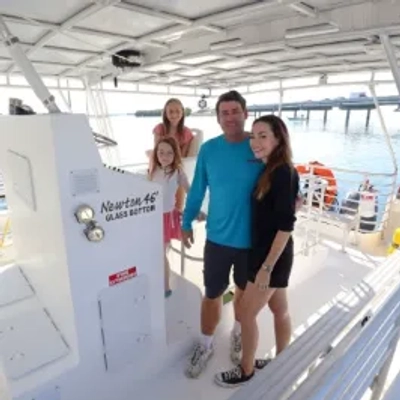
Running a glass bottom boat operation means your crew *is* the product. When guests sit above those 16 viewing windows, the person narrating what they’re seeing below makes or breaks the entire experience.
Early on, I noticed our guides going through the motions—rattling off fish names without any real spark. The turning point was simple: I stopped scheduling training sessions and started scheduling *night tours specifically for the crew* to experience the boat as guests would. Watching a green moray eel glow under our underwater lights for the first time hit different at 9pm than in any briefing room.
Once they felt that magic themselves, guides like Greg started naturally going deeper—connecting species behavior, telling stories, building real rapport. Our Google reviews started specifically naming crew members, which created healthy pride and internal accountability that no management memo ever could.
If your team is disengaged, ask whether they’ve actually *experienced* what your customers experience. That gap between “doing a job” and “believing in the thing” is usually the whole problem.
Restore Influence With Reversed Decisions
A few years ago I noticed something strange happening inside a team that, on paper, looked perfectly fine. Deadlines were being met. No one was openly complaining. But the energy was… flat. Meetings felt quiet in the wrong way. People contributed just enough to finish the task and then disappeared. It wasn’t burnout exactly — it was more like quiet detachment.
At first we tried the usual fixes: check-ins, surveys, even bringing in a facilitator for a couple of sessions. Nothing really changed. Then during one small group conversation, someone said something that stuck with me: “It doesn’t really matter what we think — the direction is already decided anyway.”
That was the turning point.
I realized the problem wasn’t motivation or morale. It was perceived influence. People didn’t feel their thinking had any real impact on the outcome, so naturally they stopped offering it.
Instead of asking for more engagement, we flipped the structure of meetings entirely. For a few months, we ran what we called “reversed decisions.” The team would analyze a problem, debate options, and make a recommendation before leadership said anything. My role in those meetings was deliberately constrained — I could only ask clarifying questions, not propose solutions.
Something interesting happened almost immediately. The quality of discussion improved. People who had been silent started debating tradeoffs. You could feel ownership creeping back into the room.
The real shift came when the team realized their recommendations were actually shaping final decisions. Not always — leadership still had context they didn’t — but often enough that their input clearly mattered.
Engagement returned because the psychological contract changed. People weren’t just executing strategy anymore. They were helping form it.
That experience taught me something important: disengagement often isn’t about laziness or culture. It’s about whether people believe their thinking can move the system. The moment they see evidence that it can, the energy usually comes back on its own.

Grant Real Authority Over Critical Problems
We had a warehouse manager at my fulfillment company who went from actively looking for new jobs to turning down a competitor’s offer in about six weeks. The shift wasn’t some grand culture initiative or motivational poster campaign.
I noticed him showing up exactly at start time instead of early like he used to. His team’s pick accuracy dropped from 99.7% to 97.2% over two months. Small stuff, but telling. When I finally pulled him aside, he didn’t complain about pay or hours. He said he felt like a glorified babysitter managing problems instead of solving them.
That hit me hard because I’d been doing exactly that to him. Every time an issue came up, I’d jump in with the solution instead of asking what he thought. I was micromanaging disguised as being hands-on.
The turning point was stupidly simple. I gave him a real problem to own: we were hemorrhaging money on damaged inventory during peak season. I told him he had full authority to redesign our receiving process, buy new equipment if needed, hire temporary help, whatever it took. His budget was $25K and four weeks.
He came back with a plan that cost $8K, involved reorganizing our entire dock layout, and required retraining the whole team on handling protocols. I approved it in ten minutes. Damage claims dropped 40% that quarter.
What I learned is that disengagement usually means you’ve turned someone capable into a task executor. The fix isn’t motivation, it’s autonomy over something that actually matters. Give them a problem that’s costing you sleep and real authority to fix it. Not fake empowerment where you second-guess every decision. Actual ownership.
That manager stayed with us until we sold the company. The competitor offer he turned down paid $15K more than we did. Money matters, sure, but feeling like you’re building something instead of maintaining it matters more.

Hear First, Assign a Flagship Build
As CEO of Software House, I had a senior developer who went from being our top performer to barely meeting deadlines over a three-month period. His code quality dropped, he stopped participating in team discussions, and two junior developers told me privately they were concerned about him.
My first instinct was a performance improvement plan. Instead, I scheduled a one-on-one coffee outside the office. No agenda, no laptop. I simply asked him what was going on in his world. That conversation changed everything.
The turning point was discovering he felt invisible. He’d been doing the same type of work for two years, watching newer hires get assigned to exciting client projects while he maintained legacy systems. He wasn’t lazy or checked out. He was bored and felt taken for granted. Nobody had asked what he actually wanted to work on.
Within a week, I moved him to lead our most complex new project, a fintech platform rebuild worth $150K. The transformation was immediate. His commit frequency doubled in the first sprint. He started mentoring juniors again. Within two months, the client specifically praised his work in a review call.
The key lesson: disengagement is almost never about the person. It’s about the environment. Before assuming someone needs a performance plan, ask yourself whether you’d be engaged doing their exact job for the same duration. Most of the time, the fix is a conversation and a reassignment, not a warning.

Set One Promise, Display Performance
As a third-generation dealer principal at Benzel-Busch and former Mercedes-Benz USA Dealer Board Chair, I’ve had to turn around disengagement without breaking the culture–because in a luxury store, attitude shows up in every handoff.
One moment that sticks: our Mercedes-Benz service lane was slipping–more “not my job” energy, slower write-ups, and CSI comments calling out inconsistency between advisor promises and technician reality. The key turning point was when I stopped trying to motivate with speeches and instead rebuilt the day around accountability + pride: one clear “promise” per repair order, owned by the advisor and verified with the foreman before the customer got the call.
We put the scoreboard where everyone could see it: daily on-time delivery %, comebacks, and a simple one-question text after pickup (“Did we do what we promised?”). In 60 days we cut comebacks meaningfully and got on-time delivery back into the 90s, and the tone changed because the team could connect their work to a win they could measure.
What actually re-engaged people wasn’t perks–it was removing the gray area. When employees know exactly what “great” looks like, can see the result, and aren’t set up to fail by overpromising upstream, they start acting like owners again.

Replace Pressure With Transparent Expertise
Running Sienna Motors for over 25 years in the competitive South Florida luxury market has taught me that employee disengagement usually stems from a lack of pride in the process. The turning point for my team was moving away from traditional high-pressure sales to a “white-glove,” enthusiast-driven model that prioritized transparency over volume.
I re-energized the staff by involving them directly in the “no games” culture, specifically during the appraisal of high-performance vehicles like the Mercedes-AMG E63 S. By encouraging the team to master the technical nuances—from carbon-ceramic brakes to “Drift mode”—they shifted from being transactional clerks to trusted advisors who actually enjoyed the 2-minute appraisal process.
This shift to a “Real Offers” policy eliminated the stress of haggling and empowered the team to handle high-value consignments for brands like Ferrari and Lamborghini with total confidence. Since implementing this transparent approach, our staff retention and client relationships have strengthened because the team no longer feels the friction of “dealership games.”
If your team is checked out, look for where your process forces them to be “slick” instead of honest. Replacing pressure with a focus on integrity and product passion transformed our workplace into a destination for both high-end buyers and motivated professionals.

Protect Focus, Strip Wasteful Rituals
We noticed disengagement rising when silent overtime became normal. People stayed late, yet morale continued to drop. In one on one conversations, we asked a simple question about what they would stop doing if they could. The answers pointed to too much status reporting and very little time for meaningful progress, which showed us that effort was high but focus was scattered.
We decided to run a reset week to change the rhythm of work. We removed half of our recurring meetings and replaced them with short written updates that took only five minutes. We added protected focus blocks to calendars and asked managers to justify any interruption. Over time, stress eased and engagement improved because our team felt trusted and supported in doing work that truly mattered.

Fire the Toxic Client, Free the Team
I will be honest: turning around a fully disengaged employee is extremely difficult if they do not want to come back. But sometimes the problem is not the employee.
I had a situation where communication with one particular client was so toxic that part of my team lost all motivation. Not just low energy. Complete shutdown. No desire to contribute, no enthusiasm for anything. The client was draining everyone around them.
The turning point was not a pep talk or a team-building exercise. We fired the client. The moment that the relationship ended, the entire team felt lighter. It was like dropping a weight we had been carrying for months. Energy came back, the quality of work improved, and our other clients benefited because the team could finally give them full attention.
The lesson I took from this is that disengagement is often a symptom, not the root cause. Most leaders only think about letting go of toxic employees. But toxic clients and vendors can destroy your team just as effectively. If one relationship is poisoning everything around it, the smartest move is to end it before it takes your best people down with it.

Rewrite Goals as a Personal Story
I had a team where goal setting had become a total eye-roll exercise — people writing down objectives that gathered digital dust until the next review cycle. The disengagement wasn’t laziness; no one saw the point.
I started by exploring each person’s relationship with goals in one-on-ones. Not “what are your Q3 objectives?” but “when you accomplished something recently, what was your process?” People realized they were already natural goal-setters in other parts of their lives, and those patterns told us how they’d be most effective at work.
Then I introduced a future-story exercise: “What’s the story you want to tell about yourself a year from now?” That reframe — from filling out a template to crafting a personal narrative — was the turning point. People connected emotionally to what they wanted instead of reverse-engineering something that sounded impressive on paper.
From there, one or two meaningful goals broken into small steps. The proof it worked? Team members started bringing up their goals unprompted and sharing progress because they wanted to, not because I asked.

Tie Craft to a Noble Mission
I’ve spent 20 years in the Houston remodeling industry leading crews through high-pressure scenarios, including the massive 2021 Texas winter storm restorations. Disengagement usually stems from a lack of connection to the end result, so I moved away from using rotating subcontractors to build a team of dedicated, multi-generational craftsmen.
The key turning point was integrating our crews into my nonprofit, Guns To Hammers, which provides ADA-compliant renovations for wounded veterans. Witnessing how their specific skills restored a veteran’s independence shifted their focus from just “finishing a task” to fulfilling a life-changing mission.
I also empowered my leads, like my custom carpenter Jesus, to take full ownership of high-detail projects such as handcrafted library built-ins using Sherwin-Williams premium finishes. Giving them the authority to problem-solve on-site and recommend improvements directly to the homeowner transformed them from passive laborers into invested project partners.
Transform Artisans Into Trusted Advisors
Managing a top 1% jewelry studio like Washington Diamond requires a team that is as “clearly better” as the GIA-certified diamonds we sell. In our private, appointment-only setting, any lack of employee engagement is immediately visible to the customer and ruins the personalized experience.
I once noticed disengagement in our workshop during a period of heavy Diamond Recutting and repair work, where the technical grind started overshadowing the artistry. I successfully turned this around by bringing our bench jewelers into private design consultations to see the emotional impact their custom craftsmanship had on our clients.
The key turning point was launching our “Diamond Editorial” education initiative, where employees became the experts teaching our community about prong integrity and stone security. Empowering them as “trusted advisors” rather than just laborers transformed the culture, leading to a significant boost in our client satisfaction ratings and a more cohesive team environment.
When your team sees their work as part of a meaningful life moment rather than just a wholesale transaction, their motivation shifts. Focus on giving your staff the same undivided attention and respect you provide to your high-end diamond clients.
Hand Over Campaign Stewardship and Latitude
There was a time when a small marketing team had clearly become disengaged. Deadlines were being met, but the energy was gone. People were quiet in meetings, ideas were limited, and it felt like everyone was just doing the minimum to get through the week.
The turning point came after we stopped focusing only on performance and started asking honest questions about what was frustrating the team. In a few open conversations, it became clear that most of the disengagement came from a lack of ownership. Tasks were being assigned in a very rigid way, so people felt like they were simply executing instructions rather than contributing ideas.
We changed the structure slightly. Instead of assigning every detail, team members were given responsibility for specific campaigns or projects from start to finish. They could plan the approach, suggest experiments, and present results to the group. Tools like Trello were used to track progress so everyone could see how their work moved a project forward.
Within a few weeks the atmosphere shifted. People started bringing ideas to meetings again because they felt responsible for the outcome, not just the task. The key turning point was realizing that engagement often grows when employees feel trusted to own their work rather than simply follow instructions.

Anchor Work to a Local Cause
Back when I opened Rudy’s Smokehouse in 2005, I inherited a small crew that was going through the motions–clocking in, clocking out, zero passion. The turning point wasn’t a pep talk. It was Tuesday.
I introduced our Tuesday charity donation program–half our earnings go to local Springfield causes. Once the staff understood their work was directly funding real people in their own community, something shifted. They stopped being employees and started being contributors to something bigger.
Within a few months, attendance issues dropped and team members were actually recruiting their own friends to come work with us. People work harder when the mission matters to them personally.
The lesson: if your team is disengaged, look at your *why* before you look at their performance. Give people a reason to care that goes beyond their paycheck, and the effort usually follows on its own.

Fuel Momentum Through Micro-Wins and Action
I reversed a toxic culture shift after our 2025 restructure caused engagement to tank to 32% and project velocity to drop by half. The 25% turnover rate required me to eliminate talent loss while achieving our Q1 objectives through complete transparency and employee recognition.
I started weekly “Wins Rounds” 15-minute meetings where team members shared their personal victories and recognitions of teammates. To reduce exhaustion, I implemented “No-Meeting Wednesdays” based on direct pulse survey feedback. The turning point came in week three: a junior analyst pitched a backlink audit idea during a Wins Round that secured a $50K client win, proving to the entire department that their voices directly influenced our bottom line.
Within just 8 weeks, motivation quickly surged to 87%, turnover dropped to zero, and velocity went way up by 55%. This turnaround proves that focusing on micro-wins and taking immediate action on feedback builds an unstoppable team. In 2026, culture isn’t a “soft” metric—it’s the engine behind your Q1 targets.

Reveal Impact With a Clear Scoreboard
Yeah. We went through a stretch where output was fine on paper, but energy was flat. Dead Slack threads. Cameras off. Lots of “sounds good” with no pushback. That’s the dangerous kind of disengagement because it hides behind politeness.
The turning point was realizing it wasn’t a motivation problem. It was a clarity problem. People didn’t see how their work connected to revenue or real outcomes. So we started tying every major project to one simple question: how does this move the business forward? We shared more numbers. We showed where wins came from. We made impact visible.
Engagement flipped when people could see the scoreboard. When someone knows their work actually shifts the needle, they show up differently. Disengagement isn’t always laziness. Sometimes it’s just fog. Clear the fog and the energy comes back.

Empower Staff to Master New Gear
Early in 2022, our small crew at BrushTamer was disengaged—stuck with basic tools on repetitive brush jobs, leading to sloppy work and high turnover risks. As founder and hands-on leader, I’ve turned around teams by tying their skills to real impact since day one.
The key turning point came during a blueberry orchard removal project in northern Indiana. I pulled the team into a hands-on training session with our new skid-steer mulcher, letting Zack Keyser lead the demo while Carter Harris mapped the site.
Crew productivity jumped 40% on that job, finishing a 5-acre site in two days instead of five. They owned the results, morale surged, and we’ve since grown from three core members to handling 20+ projects yearly without burnout.

Spark Safety With No-Penalty Prototypes
We inherited a cross-functional initiative that had become a checkbox exercise. Contributors stopped volunteering ideas and only delivered the bare minimum. We suspected the issue was safety; people didn’t want to be wrong in front of other teams. Before changing the targets, we focused on changing the environment.
The turning point came when we introduced a no-penalty prototype week. We paused major commitments and asked each function to ship one small experiment in five days. There were no slides, just something real to review together. The first demo broke the spell, and once people saw quick wins and honest lessons, collaboration became easier.

Simplify Priorities After a Metrics Pause
We once faced declining engagement in a performance-driven team. Instead of pushing harder, we paused KPIs for one week and held structured listening sessions. The turning point came when employees voiced confusion about priorities, not workload. We simplified goals from seven metrics to three core ones. Within one quarter, productivity improved and satisfaction scores rose 19 percent. Clarity restored motivation. Pressure alone never fixes disengagement.

Measure Results, Define Clear Roles
During COVID, I saw engagement start to dip as people worried about how remote work would change expectations and visibility. I reset the team around a simple principle we already valued: results over hours, with clear ownership of what each person was responsible for delivering. The key turning point was making output the shared measure of progress, which created trust and reduced the anxiety that comes from managing by presence. Once people understood they would be supported in living their lives, but still held accountable for outcomes, energy and follow-through improved quickly. That approach worked well enough that we ultimately kept our Chicago office remote after COVID.

Instill Standards That Signal Professional Pride
I stepped into a multi-generational family business after years in corporate operations at Bank of America, where I learned that disengagement stems from a lack of clear, high-standard systems. I re-energized our team by shifting the focus from “selling products” to a “customer-first” philosophy that prioritizes serving the homeowner’s best interests over making a quick buck.
The turning point was enforcing our strict Satisfaction Guarantee, requiring technicians to wear shoe covers and adhere to a “no smoking or swearing” policy in every home. This gave our staff a clear identity as high-character professionals, which is crucial when delivering high-stakes services like 24/7 emergency furnace or AC repairs in St. George.
We also educated the team on the “car maintenance myth,” treating HVAC units as systems that require honest upkeep rather than pretending they last forever. By streamlining operations to support same-day service and offering flexible financing through Wells Fargo, we replaced employee frustration with a sense of pride in delivering reliable, transparent results.

Expose Why, Give Real Ownership
There was a period when part of the team felt disconnected. Output was fine on paper, but energy was low. Meetings were quiet. Initiative dropped. At first, I thought it was workload. It wasn’t.
The turning point came when I stopped focusing on performance metrics and started asking direct, uncomfortable questions. In one-on-one conversations, it became clear people didn’t feel connected to the “why” behind what we were building. They were executing tasks, not contributing to direction.
We shifted a few things. More visibility into strategy. Clearer ownership over projects instead of micromanaged instructions. Regular check-ins that weren’t just about KPIs but about obstacles and ideas.
Engagement didn’t change overnight, but within a few months initiative started returning. The biggest lesson was that disengagement is rarely about laziness. It’s usually about lack of clarity, autonomy, or purpose. Once people understand how their work matters, momentum tends to follow.

Elevate Managers Into True Leaders
I led a series of leadership workshops designed to reverse employee disengagement by shifting managers from a task mindset to a leadership identity. The work focused on the Six Pillars of Effective Leadership: Integrity, Focus, Compassion, Stability, Empathy, and Humor, taught as characteristics to be developed rather than techniques to be checked off. The key turning point came when managers accepted permission to step into leadership and committed to embodying those pillars in daily interactions. Once that internal shift happened, leaders showed up differently, and engagement began to recover as teams felt more seen, trusted, and steady; I then provided a roadmap and coaching to sustain the change.

Align Growth Plans With Company Aims
We faced a period where some team members at our company were becoming disengaged due to a lack of direction. The key turning point was when we introduced clear personal development plans for each employee. By discussing their career goals and how those could align with company objectives, we gave them a sense of purpose and progress. Regular check-ins helped keep them on track, and it made them feel more invested in the company’s success.
To further increase engagement, we incorporated more collaborative projects, allowing employees to work cross-functionally. This not only helped build stronger relationships within the team but also encouraged creative problem-solving. The change in mindset was tangible, with employees feeling more motivated and connected to the company’s overall vision.
