

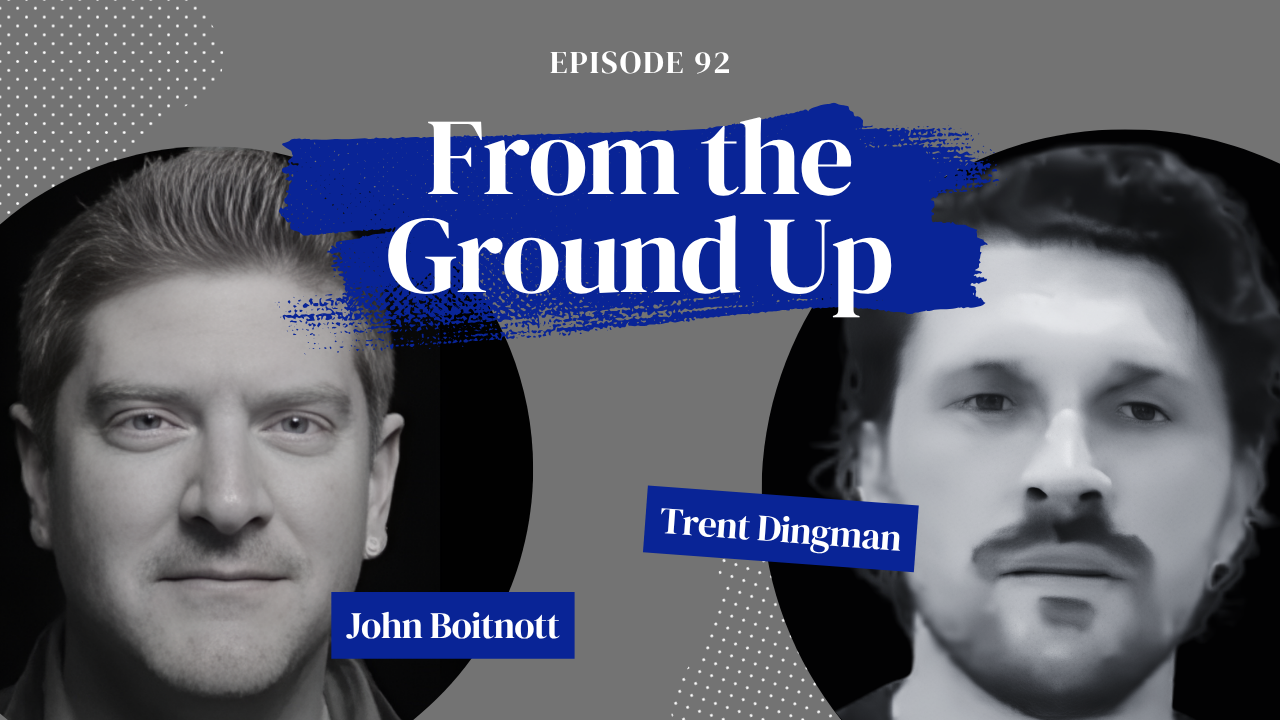
When Real Motors began developing what it calls “Future Machines,” co-founder Trent Dingman and his team did not start with a pitch deck and spend a year raising enough money to build something. They built a prototype.
That distinction says a great deal about how Dingman thinks an emerging hardware company should operate. Real Motors is developing Project : ARES, its electric motorcycle, as the first expression of a broader effort to build machines that might otherwise remain concept vehicles or science-fiction references. Yet the company’s larger experiment extends beyond vehicle design. Dingman believes the manufacturing model behind a new machine should be questioned with the same intensity as the machine itself.
For an automotive startup, that means challenging an assumption that has shaped the industry for decades: meaningful vehicle production requires enormous factories, large engineering organizations, high labor requirements, and hundreds of millions of dollars before customers see the finished product.
Build Before You Scale
Dingman’s mechanical engineering background taught him to approach existing products by repeatedly asking why they had been designed a certain way. He and Real Motors co-founder Michael Feng worked together on electric outdoor power equipment before forming their company, where that questioning became central to their development process.
Real Motors initially experimented with different vehicle formats, including an electric side-by-side, before Project : ARES emerged as its first Future Machine. Motorcycles offered an especially useful starting point because they could communicate the company’s design and engineering philosophy while remaining manageable enough for a small team to prototype rapidly.
The team also entered the category without some of the assumptions that come from spending an entire career in motorcycles. Dingman had never ridden one before ARES, and several early team members had similarly limited motorcycle backgrounds. Instead of treating that inexperience solely as a disadvantage, they used it to reconsider the experience of getting on an electric motorcycle and riding it.
ARES removes elements such as a conventional clutch and emphasizes a direct, responsive relationship between rider and machine. The company’s Founders Edition sold out, while Dingman says buyers have included both experienced motorcyclists adding something unusual to their collections and people who see ARES as their reason to ride for the first time.
Manufacturing Becomes an Engineering Problem
The same first-principles thinking becomes more consequential when applied to production. Dingman questions why an EV startup should automatically begin by raising enough money for a massive factory, installing fixed production lines, and then depending on enormous volume to justify the infrastructure.
Real Motors is pursuing a smaller, more iterative path. Prototypes can be developed over months rather than years, allowing engineers to test a physical machine before committing to an industrial system designed around it. The company is also exploring how automation, AI tools, CNC equipment, metal 3D printing, and other manufacturing technologies could reduce the amount of labor embedded in production.
For Dingman, reducing labor requirements is particularly important to making more manufacturing economically practical in the United States. It also creates an opportunity to narrow the distance between engineering and production. Instead of designing a product and handing it into a manufacturing system built around different constraints, future engineers could have much more influence over how their designs become physical objects.
This approach also changes the capital question. Dingman does not argue that hard-tech companies can operate without significant investment. Real Motors itself is raising capital. His point is that founders should examine what the product actually requires before accepting the industry’s historical cost structure as inevitable.
From Configuration to Personalization
The longer-term implication reaches beyond making factories smaller. Dingman imagines localized manufacturing becoming flexible enough that customers could eventually configure more than superficial options such as paint color. Advances in engineering and production could allow buyers to alter geometry, form factors, and other meaningful aspects of a machine before it is produced.
Real Motors is still building toward that future. Its assembly operation is developing, Project : ARES remains the company’s first Future Machine, and Dingman expects the coming years to bring additional machines serving different markets.
The important part of the experiment is that Real Motors is not waiting until it has the infrastructure of a traditional automaker to begin behaving like one. Its prototypes are helping determine what infrastructure it actually needs. For a company trying to build machines that do not yet fit established categories, Dingman sees little reason the factory behind them should be constrained by established categories either.
Want more From the Ground Up? Check out more articles or head over to YouTube, Apple, or Spotify to watch the videos.