

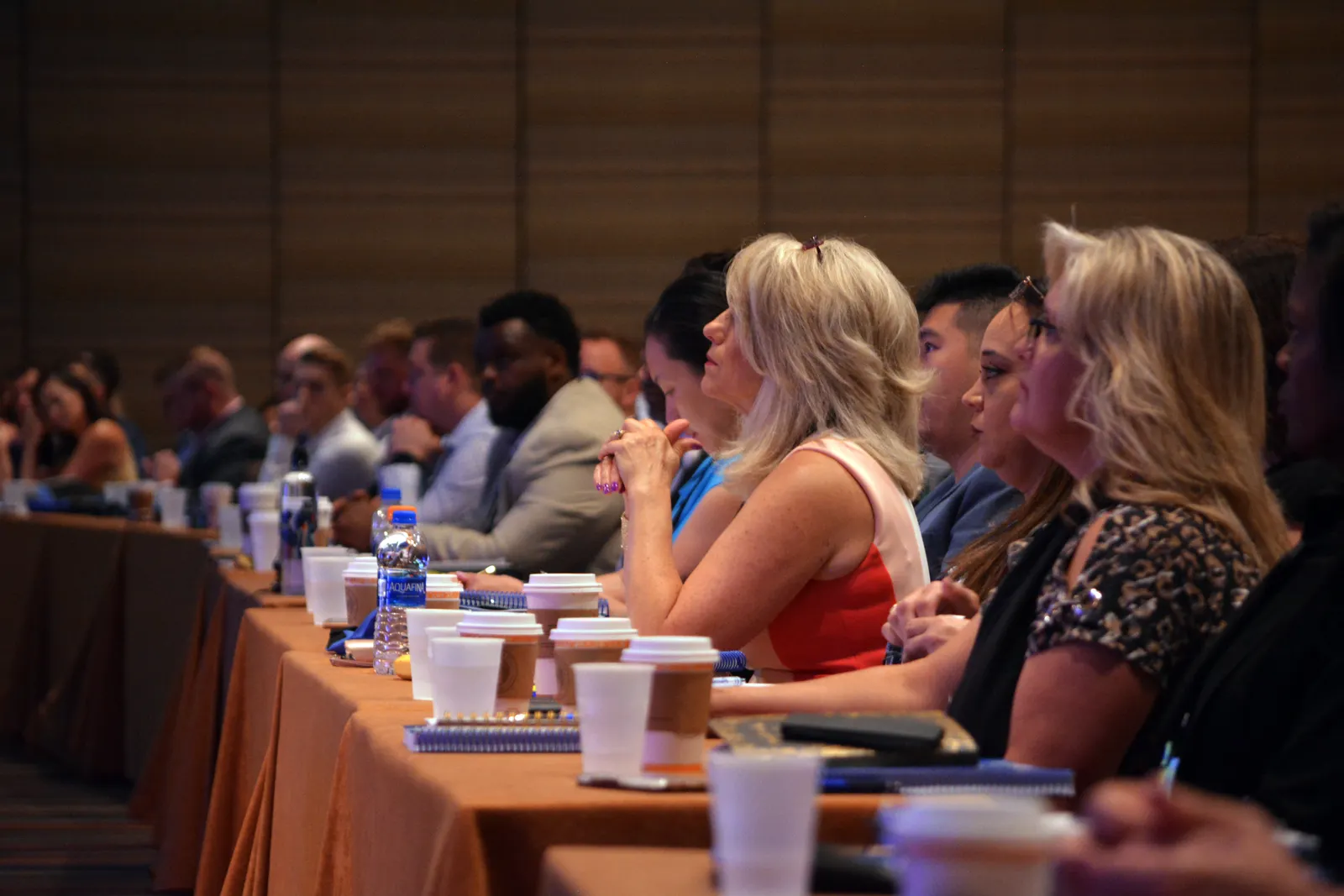
Five veteran communications and media leaders urged the next generation to question the old playbook for success during a New York Women In Communications event held with Bloomberg Media on Monday, Nov. 16th. The panel focused on career choices, relationships, setbacks and turning points.
The 2026 group included former FCB Global Chief Creative Officer Susan Credle, Sinecure.ai Chairman Wenda Harris Millard, The Daily Beast Chief Creative and Content Officer Joanna Coles, FGS Global Executive Board member Sally Susman, and The LIT Group Co. Founder & CEO Lisa Torres. The Meteor Co-founder and CEO and former Glamour Editor-In-Chief Cindi Leive moderated at Bloomberg’s New York City headquarters.
Why the Playbook for Success Keeps Changing
Harris Millard challenged the idea that a familiar career formula will keep working. She said the old playbook that brought people to this point is not the same one they need for today or tomorrow.

She urged young professionals to stay alert, listen and take part without assuming they have everything figured out. In her view, the pace of change makes it difficult to treat past formulas as guarantees of future results.
The panel itself began in 2019, when Chief Operating Officer at WPP Devika Bulchandani, AMC Global Media President and Chief Commercial Officer Kimberly Kelleher, and Omnicom Chief Client and Business Officer Jacki Kelley brought the group together. It was first called Original Fearless Girls of Advertising before the name changed to The OGs.
Kelley recalled concerns about diversity, stereotyping and retention. The organizers wanted to bring women in their organizations together in a meaningful way. With help from Bloomberg Media Chief Commercial Officer Christine Cook, the panel held its first spring gathering, where participants shared lessons from their careers.
Experience and Judgment Alongside AI
Bulchandani said the five featured leaders offer a useful example as industries face changes involving AI. She argued that AI lacks personal stakes and consequences when it gets something wrong, and cannot read a room.
She contrasted that with the leaders’ ability to judge when to speak, what is worth saying and how a message will reach people. Her point placed experience and human judgment at the center of the discussion, rather than treating new technology as a replacement for those skills.
Other CEO coverage has examined how leaders think about the responsibilities of their roles, including this account of Canva’s founders discussing when they would step aside. The panel’s comments likewise focused on how leaders assess their own abilities and choices.
Fear, Failure and the Value of Work
Asked about fear, Harris Millard said fear of success and fear of failure can look alike. She was unsure she had overcome the former, but said she did not let the feeling overwhelm her.
Susman called fear a constant companion throughout her career. She said fear of success and imposter syndrome can be two sides of the same coin, and described fear as something that motivated her to challenge herself. She added that people may learn to live with fear instead of abolishing it.
Torres said she wished she had understood earlier that a title was rented while ability, integrity, character and work belonged to her. She observed that people starting careers can tie their self-worth to a job title. For her, credibility came from the work and the people she helped succeed.
Susman also recalled sharing her manuscript, “Breaking Through: Communicating to Open Minds, Move Hearts, and Change the World,” with her mother. Her mother advised her not to publish it because it detailed her failures. Susman said those failures helped her become more resilient and stronger, and that dwelling on unimportant details could obscure effort, accomplishments and outcomes.
Connection, Boundaries and Career Choices
Coles said she enjoys the ways people have found to stay connected, including newer platforms. She said she was doing ten podcasts a week and felt overwhelmed by the pace. Harris Millard voiced concern about social interaction at work, saying technology and the pandemic had contributed to a drift from in-person connection. She missed the collaboration and informal exchanges people once found around an office water cooler.
Torres said people with children need support outside work as well as a team at work. A partner, friends or teammates can help with family responsibilities, while personal boundaries help clarify what someone is willing to do and what they do not want to miss.
Coles recalled that when her children were young, Hearst had a gym and medical center in its building. She also valued working alongside women with children, who shared stories and became her support system.
The leaders closed with practical advice. Coles said people are judged by how they present themselves at work. Credle urged professionals to take initiative instead of waiting to be asked. She recalled taking on a different project at BBDO, then selling a Pepsi campaign. The experience showed her boss that people wanted her work, she said. A related look at a CEO leadership group also centers on how experienced executives share knowledge.
Credle’s advice was to look for opportunities and make things happen. That call to act, alongside the panel’s emphasis on judgment, resilience and support, gave the event a concrete message for professionals building careers amid changing expectations.
