

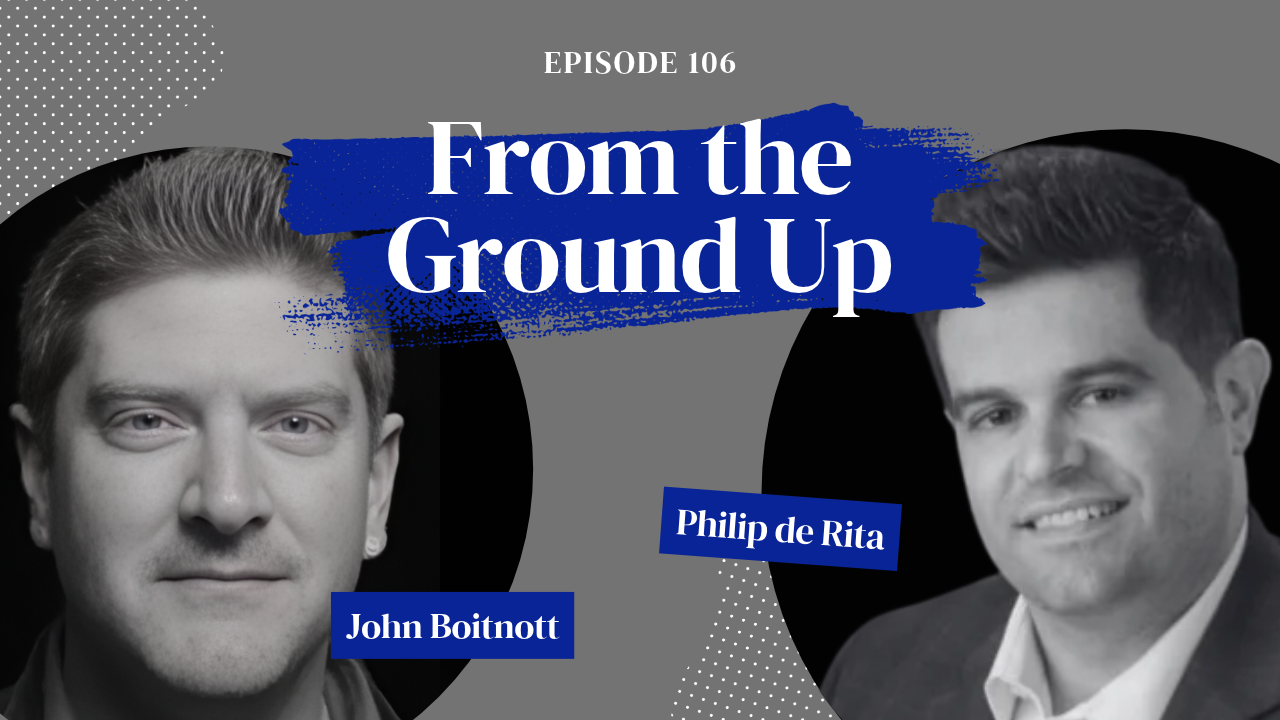
Philip de Rita has spent much of his career working with organizations that care deeply about their missions but struggle to explain them. From youth services to fundraising and radio advertising, he has watched limited budgets prevent good work from reaching potential supporters.
Now the founder of Personalized Communication Design Services, or PCD Services, de Rita helps nonprofits and small businesses improve their communications. He starts by asking what makes people care about a mission. On From the Ground Up, he tells John Boitnott that clear messages and sound business practices can turn attention into lasting relationships.
Start With the Part of the Mission People Remember
Nonprofit leaders often identify fundraising and volunteer recruitment as their biggest problems. Once he learns more about an organization, however, he often discovers a more fundamental disconnect between what it does and what its audience hears.
Organizations eager to describe every program can bury their core message beneath history, services, and future plans. When everything seems equally important, potential supporters may struggle to understand what makes the mission distinctive.
That is too much information for someone encountering the organization for the first time. He encourages clients to identify their “passion points,” the aspects of their mission that make a potential supporter want to learn more.
Give people a reason to pay attention first. Once they feel connected, introduce the full range of work.
Good Intentions Still Require Business Discipline
De Rita understands why smaller nonprofits struggle to maintain that focus. Their leaders often handle fundraising, operations, marketing, board relationships, and direct service simultaneously.
He learned these pressures working with at-risk youth and later in nonprofit development. His experience selling radio advertising also showed him how difficult marketing decisions become when a small organization has only a few thousand dollars to spend.
A short radio campaign could consume nearly an annual marketing budget. He learned to choose channels carefully instead of pursuing the widest audience.
Today, he encourages nonprofits to think more like businesses about budgets, goals, and the people they hope to reach. Awareness might be useful, but an upcoming event, donor campaign, or volunteer initiative requires a more specific approach.
It also requires measurement. De Rita points to tools such as QR codes, website analytics, and social media click-through rates that can show whether a campaign is prompting people to engage.
He recalls a small Facebook and Instagram campaign that achieved roughly twice the click-through rate he considered typical. Website analytics showed visitors arriving from the ads.
Find the Stories Already Happening
For de Rita, the strongest stories already exist inside everyday programs. He offers an example from his involvement with the YMCA as a swimming instructor. An organization can report how many lessons it delivered in a quarter, but that figure does not communicate what the lessons meant to an individual child.
A young swimmer overcoming her fear of diving with a coach’s help tells a different story. It shows the relationship and progress behind the program’s numbers.
De Rita believes organizations often overlook these stories because the work feels routine to those delivering it. He developed a storytelling framework to help teams recognize an experience, identify why it matters, and communicate it in a way others can share.
He shared the approach in the collaborative book Seen, Found, Recognized, Remembered, and Chosen. Such stories demonstrate what the mission accomplishes.
Build Partnerships Beyond the Donation
De Rita also wants nonprofit leaders to rethink collaboration. Some worry that partnering with another organization could mean losing donors, even when the organizations serve complementary needs.
He encourages organizations to focus on what they do best and partner with others that provide complementary services. The opportunity extends to businesses. He describes a New Jersey mental health nonprofit working with a car dealership that supports its transportation needs, including vehicles and servicing. That relationship offers practical assistance beyond the visibility of a traditional sponsorship.
Finding those partnerships requires curiosity about people, not just their capacity to give. De Rita encourages nonprofit leaders to learn what motivates business owners personally and where their values intersect with the organization’s mission.
He also urges leaders to stay close to the people receiving services. At an earlier youth organization, one leader regularly spent time in the cafeteria with the young men it served.
That perspective shapes PCD Services. De Rita wants to expand his network of creative partners while keeping personal relationships central.
For nonprofit leaders facing constant pressure to find the next grant or donor, his message is practical: remember whom you serve, explain why the work matters, and build the systems and relationships that allow it to continue. That makes communication part of the organization’s ability to deliver on its promise, not an optional promotional expense.
Want more From the Ground Up? Check out more articles or head over to YouTube, Apple, or Spotify to watch the videos.