

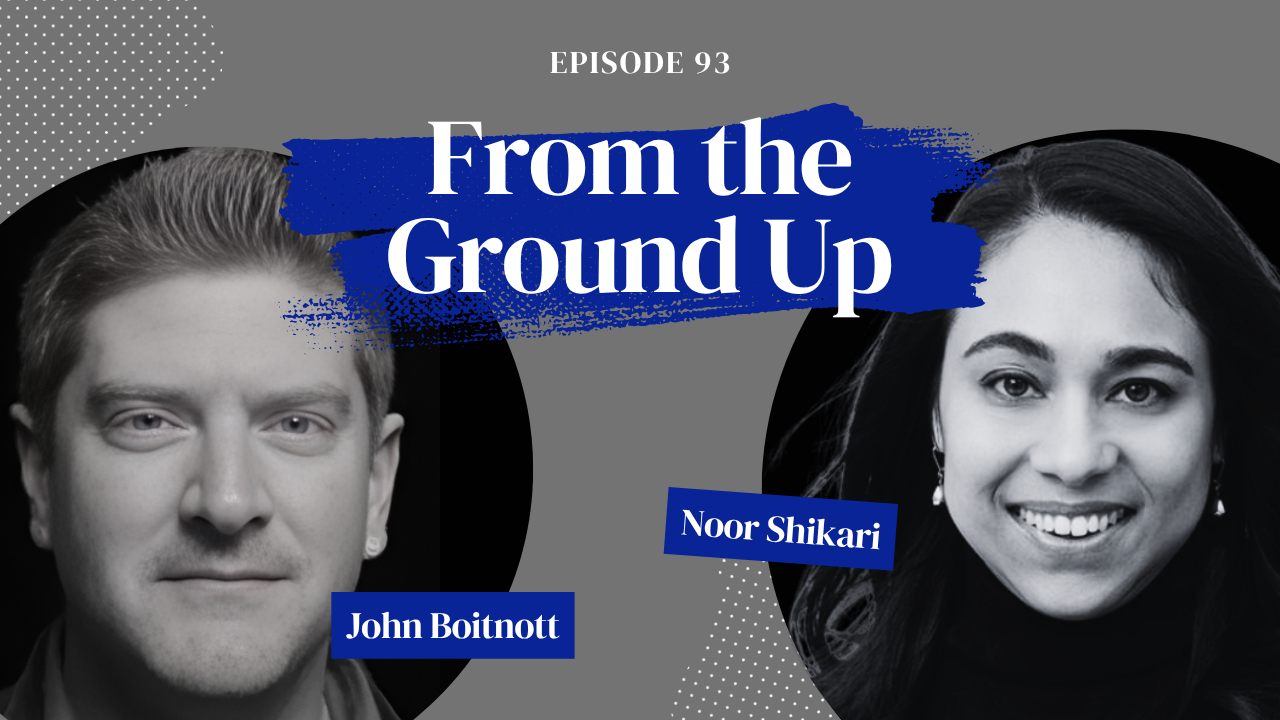
Before Noor Shikari entered financial services, she spent nearly 15 years owning and operating a restaurant.
It might sound like a dramatic career change. To Shikari, however, the two chapters are more connected than they initially appear.
Running a restaurant taught her how to manage people, watch margins, understand cash flow, solve problems quickly, and keep moving when circumstances didn’t follow the plan. More importantly, it taught her that working incredibly hard doesn’t automatically create long-term financial security.
That realization eventually helped push Shikari toward financial services, where she now works with individuals and businesses while helping develop other financial professionals.
Her career has become a story about reinvention—and about recognizing that starting over doesn’t mean starting from nothing.
What Entrepreneurship Teaches You About Uncertainty
Shikari’s first business was a Mexican restaurant in Brooklyn, New York. It began as a passion project designed to bring a different experience of Mexican cuisine and culture to the neighborhood.
Like many entrepreneurs, she learned quickly that running a business was about much more than having a good concept.
There were employees to manage, expenses to control, margins to understand, customers to serve, and unexpected problems demanding immediate solutions.
Then came larger disruptions.
Shikari was a business owner during the 2008 financial crisis. Years later, the COVID-19 pandemic created extraordinary uncertainty for restaurants and hospitality businesses.
Those experiences reinforced a principle she now carries into financial planning: You can’t predict every crisis.
What you can do is prepare.
That can mean building liquidity, managing risk, protecting income, understanding expenses, and creating options before they’re desperately needed.
“Planning isn’t predicting,” Shikari says. “It’s preparing.”
Don’t Confuse a Downturn With the End of Your Business
Economic uncertainty can make entrepreneurs emotional about decisions involving something they’ve spent years building.
Shikari believes one of the most valuable skills a business owner can develop is learning to separate those emotions from the numbers.
When revenue slows, entrepreneurs need clarity about cash flow, expenses, priorities, and what remains within their control.
They also need to be willing to adapt.
Sometimes, Shikari says, the business you eventually operate isn’t the business you originally intended to build. Changing direction doesn’t necessarily mean the original idea failed. It can mean the entrepreneur paid attention to reality and responded accordingly.
That principle applies to personal finances as well.
Business owners can become so focused on keeping their companies alive that their personal financial lives become secondary. But the two can be deeply intertwined. Shikari encourages entrepreneurs to think about liquidity, debt, family protection, and their financial plans outside the business before a crisis forces those conversations.
Hard times can require changing direction. They can even require starting again.
But, as Shikari puts it, “You’re never starting from zero. You’re always taking what you’ve learned with you.”
Reinvention Doesn’t Erase Your Experience
That lesson also defines Shikari’s career.
Moving from hospitality into financial services required entering an industry where she didn’t initially have the same track record. But she didn’t leave her entrepreneurial experience behind.
Her ability to build relationships mattered. So did listening, problem-solving, leadership, understanding business owners, and knowing firsthand what uncertainty feels like.
That’s why Shikari pushes back when people tell her it’s too late to change careers.
A previous career can become an advantage in the next one.
She sees financial services as particularly interesting for career changers because professionals can bring knowledge of other industries and communities into their work. That can create opportunities for entrepreneurs, women, immigrants, first-generation professionals, and others who may not initially picture themselves in the industry.
The path can still feel intimidating. Licensing and terminology create barriers. Performance-based compensation can feel risky, especially to someone who doesn’t have a family history of entrepreneurship or wealth.
There can also be a misconception that financial services is simply about selling insurance or investments.
Shikari sees the work more broadly: advising, educating, developing relationships, understanding goals, and helping people make decisions.
Financial Planning Isn’t Only for Wealthy People
One of the money myths Shikari frequently encounters is that someone doesn’t earn enough to need a financial plan.
She argues that the opposite can be true.
When resources are limited, every dollar can become more consequential. A plan can help someone understand what those dollars need to accomplish rather than waiting for a future income level at which financial planning suddenly seems worthwhile.
Earning more money doesn’t automatically create better habits, either. Without changing how someone saves, spends, manages debt, or plans, additional income alone may not create financial security.
Investing is only one component of that larger picture. Financial planning can also encompass cash flow, taxes, risk protection, estate considerations, family goals, and retirement.
And the first conversation with a financial professional doesn’t have to begin with a perfect spreadsheet or sophisticated investment strategy.
Shikari believes it should begin with the person’s actual circumstances and priorities.
Someone might care most about college expenses. An entrepreneur may be worried about taxes. Someone else might want a review of decisions they’ve already made.
The professional needs to understand why that person came to the table before prescribing a destination.
Life Insurance Is a Tool, Not a Magic Solution
Life insurance is one area where Shikari believes context matters.
At its foundation, she describes life insurance as protection. Different forms of insurance work differently, however, and the right discussion isn’t simply whether someone “needs life insurance.”
Instead, the questions should involve the financial risks someone is trying to protect against, their goals, and which tools fit within their broader plan.
She points to a difficult but familiar example: families turning to crowdfunding after someone dies because the financial resources for funeral costs or the resulting loss of income aren’t available.
Planning can’t eliminate grief, but appropriate protection can potentially prevent a family from facing an immediate financial emergency on top of it.
“It’s a planning tool,” Shikari says, “not a magic solution.”
Families Need to Talk About Money
Shikari also wants families to challenge another deeply rooted belief: that talking about money is rude.
Parents sometimes shield children from financial conversations because they want to protect them from stress. The unintended result is that a child can grow up seeing bills get paid without understanding how those decisions happen.
Then, at 18 or another arbitrary point in early adulthood, they’re suddenly expected to make important financial decisions themselves.
Shikari isn’t suggesting that children should control the household budget. She advocates for age-appropriate exposure.
Parents can talk about earning, saving, spending, and giving. They can explain why choices have trade-offs. They can even allow children to make small financial mistakes while the consequences are still manageable.
The goal is confidence built through experience.
“We don’t want to just leave our children money,” Shikari says. “We wanna leave them the knowledge to manage it.”
Financial Resilience Is About Creating Options
Across entrepreneurship, career changes, family finances, and mentorship, a common theme runs through Shikari’s story: resilience isn’t simply the ability to work harder.
It’s the ability to reassess.
A financial plan shouldn’t be so rigid that a change in circumstances destroys it. A career plan shouldn’t assume someone can never change direction. And an entrepreneur shouldn’t become so attached to the original version of a business that they refuse to respond to reality.
The future will always contain uncertainty.
The objective isn’t to develop a crystal ball. It’s to build enough knowledge, preparation, and flexibility that when circumstances change, you still have choices.
Want more From the Ground Up? Check out more articles or head over to YouTube, Apple, or Spotify to watch the videos.