

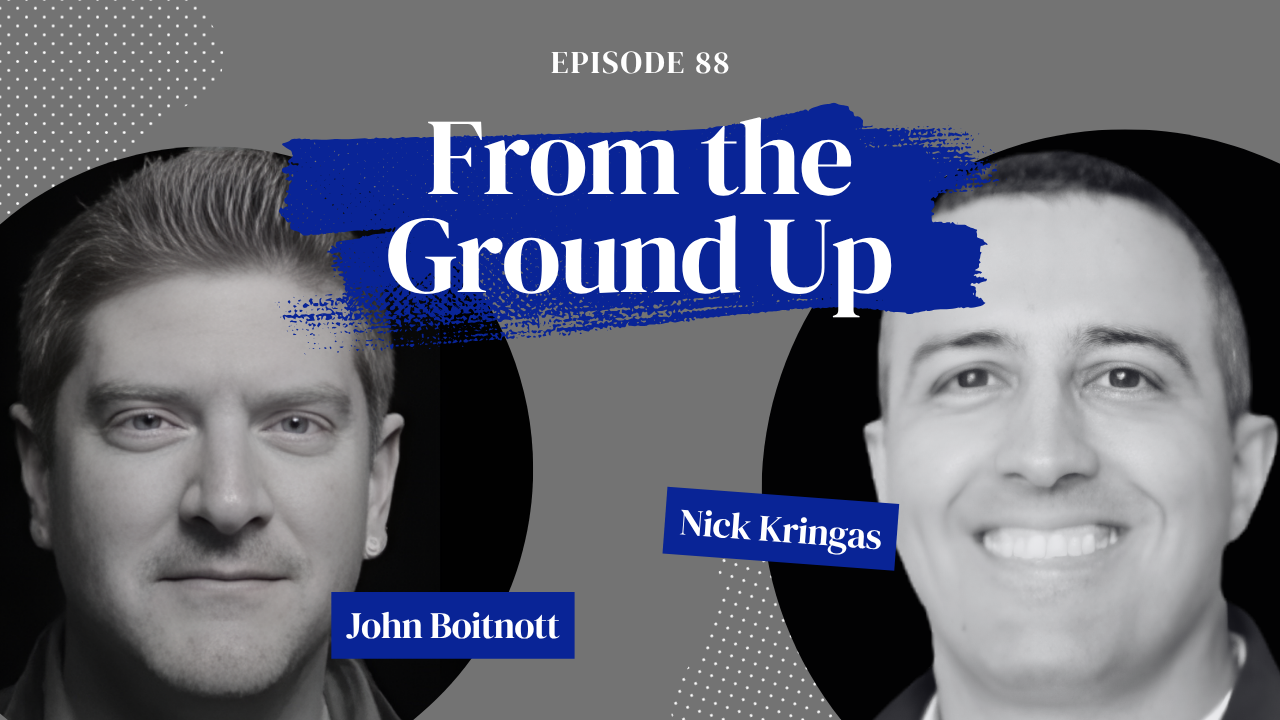
Nick Kringas has spent much of his career entering markets that eventually became crowded.
His family opened a Greek restaurant in an area with few direct competitors, and the restaurant was busy almost immediately. Years later, after Kringas moved into search engine optimization, his company focused specifically on law firms at a time when relatively few SEO businesses had specialized that narrowly. That business also grew quickly before competition multiplied.
Those experiences shaped how Kringas thinks about markets. When technology changes, he is less interested in adopting the newest tool for its own sake than in understanding what has changed for the customer.
That distinction became central to LawSHIFT, the company he founded with partners Lydia Flocchini and Kellen Bachman. As AI changes how people look for legal information, Kringas believes personal injury firms face a problem that begins well before someone fills out an intake form.
The Overlooked Period Before a Client Calls
Law firms traditionally concentrate significant marketing resources on people who are already looking for an attorney. Kringas calls attention to an earlier period, beginning when someone is injured and continuing until that person contacts a firm.
LawSHIFT calls this the “pre-intake” window.
During that period, people may be trying to understand what happened, whether they have a viable case, what their options are, or what a claim might be worth. Increasingly, they can ask an AI system those questions before ever speaking with an attorney.
Kringas sees a problem in leaving that entire experience to general-purpose AI tools. Someone may arrive at a law firm with assumptions about a case that an attorney then has to correct. More importantly for firms, potential clients may never reach traditional intake at all.
LawSHIFT is developing products around that gap, including tools intended to provide useful information earlier in the process and connect injured people with appropriate legal counsel. The larger principle extends beyond personal injury law. Businesses need to understand where customers are experiencing difficulty before deciding where AI belongs.
“Focus on the client,” Kringas says. “Removing friction for the client, solving problems for clients.”
AI Visibility Is Not Simply SEO With a New Name
Kringas arrived at LawSHIFT after years in legal SEO, which gave him reason to question another common assumption about AI.
When the company examined firms attending a personal injury legal marketing event, Kringas expected firms with strong search authority to also have strong visibility in AI-generated answers. According to LawSHIFT’s analysis, the relationship was surprisingly weak.
The company expanded its research through what it calls the AI for PI Index, tracking thousands of prompts to study which personal injury firms different AI systems mention and which sources those systems rely upon.
The findings changed how Kringas thought about online visibility.
Traditional search asks businesses to compete for rankings. AI systems can instead interpret information from multiple sources and recommend a business directly. A law firm that spent years improving its Google position cannot assume that investment automatically makes it prominent when someone asks an AI system for help.
LawSHIFT’s research also suggests that different AI platforms rely on different sources. Kringas says legal directories play an important role in personal injury recommendations, while LinkedIn has been influential for LawSHIFT’s own business-to-business visibility.
The practical challenge is understanding how a company is being interpreted across the information environment rather than simply asking where its website ranks.
Technology Is Useful When It Removes a Real Constraint
Kringas first adopted AI inside his previous SEO business for a much less ambitious reason. Revenue was contracting, and the company needed to operate more efficiently. AI helped with content development and editing, allowing the team to accomplish more with fewer resources.
That experience reinforced a view that now guides LawSHIFT. The value of AI is tied to the outcome it helps produce.
For a personal injury firm, that may mean reaching someone while that person is still trying to understand an injury and available legal options. For another company, it could mean removing a confusing step from purchasing, customer service, or product discovery.
Kringas expects businesses to become increasingly accountable for outcomes as AI makes knowledge and execution easier to access. That makes understanding the customer more important, not less.
The technology will continue changing. The more durable question is where customers are still struggling and whether a business is willing to meet them there.
Want more From the Ground Up? Check out more articles or head over to YouTube, Apple, or Spotify to watch the videos.