

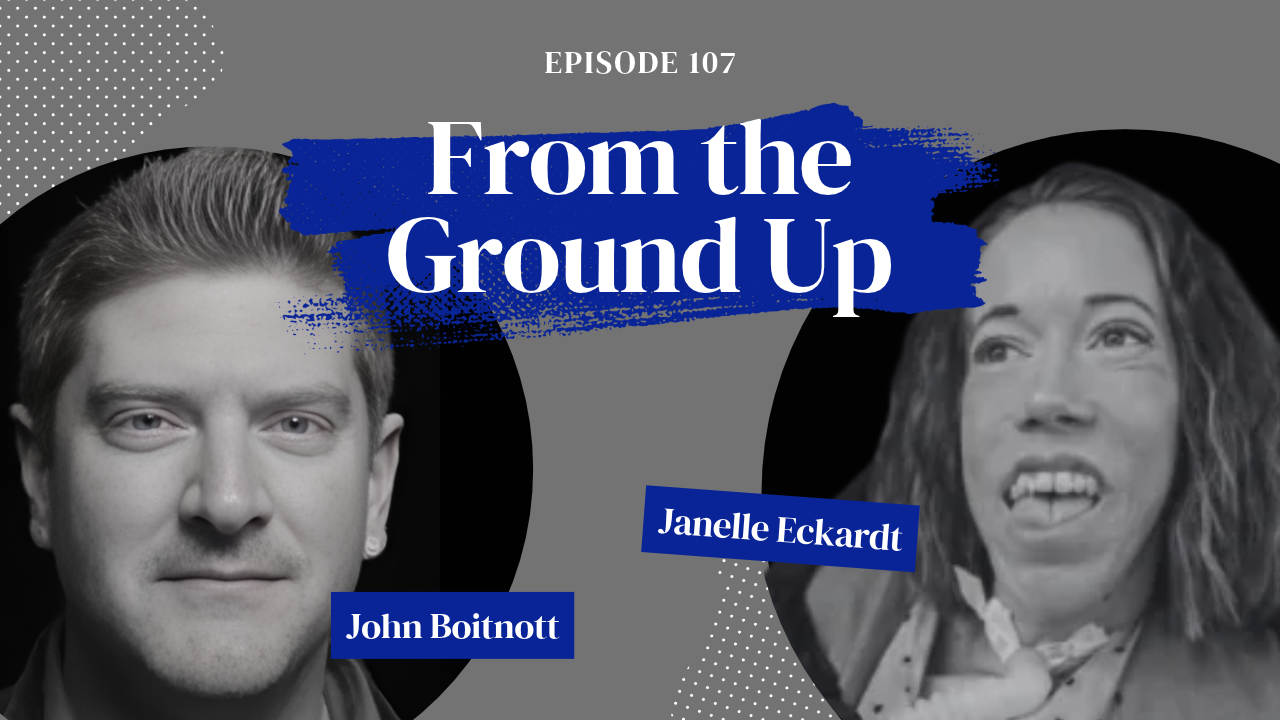
When Janelle (Jay) Eckardt began training as a health and wellness coach in 2020, she expected to learn practical ways to help people navigate personal change. Instead, she encountered a problem that made her question whether she belonged in the profession.
Many of the mindfulness exercises she was taught assumed participants could control their breathing, move their bodies, or sit in prescribed positions. Eckardt, who has congenital muscular dystrophy and uses a tracheostomy and ventilator to breathe, could not comfortably participate in some of them.
She completed her training while keeping those concerns largely to herself. Today, as a certified coach, disability advocate, writer, and founder of Problematic Pineapple, she is challenging the assumptions that once made her feel excluded.
When a Wellness Tool Becomes a Barrier
Eckardt came to coaching after more than a decade in freelance writing and editing. During the pandemic, she wanted to pursue work that would make a direct difference in people’s lives, particularly within communities she cared about.
But her training introduced exercises that were valuable for many participants and inaccessible to her. Unable to engage with some of the techniques she was expected to teach, she experienced insecurity and questioned whether she could support future clients effectively.
The turning point came after certification, when she decided to focus on people with complex disabilities, chronic illnesses, and cognitive considerations. Rather than trying to fit an established coaching model, she could design programs around the people she wanted to serve.
She began by identifying the intended outcome of each exercise and assembling different ways to reach it. If the goal was grounding or emotional awareness, clients did not necessarily need to control their breath or follow the same physical instructions.
That change became the foundation of her approach. The objective stayed consistent, but the path could adapt to each person’s circumstances.
Rethinking Breathwork and Forced Positivity
Eckardt is clear that she does not oppose breathwork. For people who can engage with their breathing comfortably, it can be a useful mindfulness practice.
For her, however, breath control is not an accessible option. Her ventilator manages her breathing, and attempting to hold her breath can produce discomfort and anxiety. An instruction meant to induce calm can therefore have the opposite effect.
Movement-based exercises can present similar problems. Asking someone with chronic pain or particular sensory needs to hold a position for several minutes may create distress rather than relief.
She also questions the pressure to practice gratitude by minimizing difficult experiences. People with disabilities may already face medical trauma, inaccessible services, and exhausting administrative demands. Being told that circumstances could always be worse can make legitimate frustration feel unwelcome.
Eckardt prefers what she calls gentle gratitude, which makes room for appreciation without requiring people to deny anger, grief, or exhaustion. Those emotions can coexist rather than cancel one another out.
Offering More Than One Way to Be Present
Through Problematic Pineapple, Eckardt has shifted toward creating resources people can use independently. She recognizes that conventional one-to-one coaching can be financially inaccessible, especially for people managing ongoing medical needs.
Her book, No Breathwork, No Bullshit, introduces five accessible exercises that do not depend on prescribed breathing or body positions. In the interview, she highlights several practices she returns to herself.
Mental noting involves identifying an emotion as it arises without judging it or feeling compelled to act. Mantras offer another anchor, using a word, phrase, or sound repeated to direct attention toward the present.
She also discusses sound-based practices as a possible entry point for people who find other mindfulness techniques difficult. Their suitability depends on the individual, and they need not be presented as a universal solution.
These options reflect a principle Eckardt wants more practitioners to embrace: the method is not the goal. If the aim is greater awareness, calm, or room to acknowledge difficult feelings, there may be several legitimate ways to work toward it.
Accessibility Starts With Listening
Eckardt believes wellness professionals usually bring genuine care and valuable personal experience into their work. The problem arises when their own experience becomes the assumed standard for everyone else.
Limited representation compounds that problem. Disabled people encounter barriers to education, employment, and professional wellness spaces, leaving fewer people positioned to challenge inaccessible assumptions during training and program design.
Her recommendation is to ask clients better questions about comfort, pain, and what approaches feel workable. Practitioners may understand a methodology, but clients understand their own bodies and experiences.
She encourages professionals to welcome feedback before, during, and after a coaching relationship. That information can improve the experience for the next person as well.
On From the Ground Up, Eckardt offers a broader definition of inclusion. Accessibility does not mean discarding tools that work for others. It means expanding the choices available so no one is excluded simply because they cannot follow one particular set of instructions.
Want more From the Ground Up? Check out more articles or head over to YouTube, Apple, or Spotify to watch the videos.