

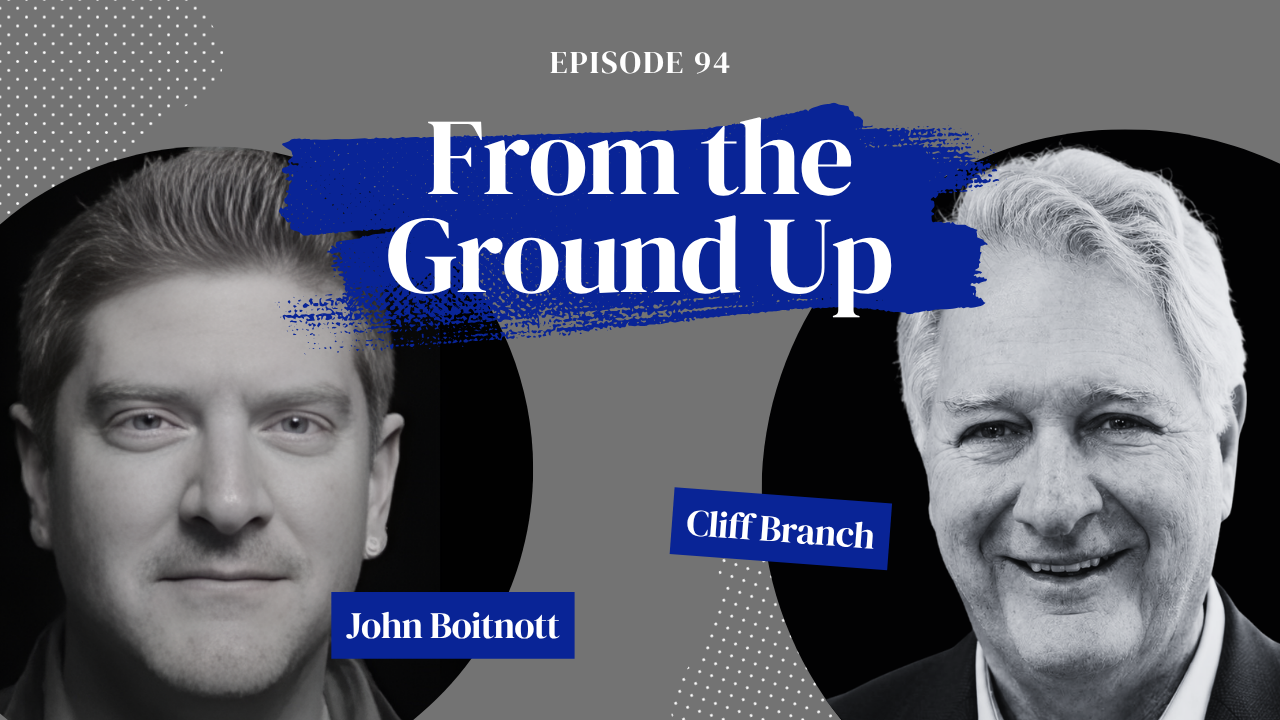
Cliff Branch has spent much of his life noticing changes before they fully settled into the culture around him. As a young entrepreneur in California, that meant recognizing that college students wanted stereo components instead of the large furniture-style systems their parents owned. Later, it meant watching redwood hot tubs become more than a novelty and building a national business around them.
That instinct to observe what people are doing, what they want, and where things may be heading eventually carried Branch beyond business. Now in his seventies, the longtime Central Coast entrepreneur has turned his attention toward American politics, media, technology, and civic life in American Made 2016 to 2026: A Nation in Turmoil. The book comes from a different place than his earlier companies, but the habit behind it is familiar. Branch sees something changing and feels compelled to respond.
Entrepreneurship Began With Paying Attention
Branch grew up in Carmel and Santa Barbara before attending Cal Poly in San Luis Obispo. His first business was a small head shop near campus selling black-light posters and other products aimed at college students. That operation gave him a close view of the way young consumers were separating themselves from the habits and tastes of their parents.
Audio equipment became an early example. Students wanted individual stereo components they could choose and upgrade, not the large wooden cabinets common in older homes. Branch moved into the stereo business, opened stores, operated a recording studio, and eventually helped build a company selling equipment to college students around the country through mail order.
The insight wasn’t especially complicated. Branch and his partners understood the customer because they were close to the customer’s world. They paid attention to how people were living rather than assuming yesterday’s market would continue indefinitely.
That same instinct later led him into hot tubs. While spending time in Santa Barbara, Branch noticed the popularity of redwood tubs at parties and social gatherings. He installed one at his own home in San Luis Obispo and watched how strongly people responded to it. Instead of treating that as an amusing part of California life, he saw a business.
The company eventually expanded into a large manufacturing operation with dealers around the country before Branch sold it. Other businesses followed, along with development projects and investments, but he carried the same basic approach from one venture to another. Notice the change, understand why people care about it, and decide whether there is something worth building.
Writing Came From a Similar Impulse
Branch’s interest in writing developed alongside his business career. Both of his parents wrote, and political conversations were common in his family. His mother worked in newspapers and was involved in women’s rights issues, while his father’s work exposed Branch to international affairs and government policy.
He wrote a novel in college questioning the Vietnam War. In the 1980s, he wrote a practical book about cocaine use after becoming frustrated that he could not find the kind of resource he was looking for himself. Published under a pen name, the book eventually reached a large readership.
His later writing began more casually. Nieces and nephews encouraged him to record stories about his childhood, the Central Coast, and the companies he had built. What started as a family project eventually reached a publisher interested in baby-boomer experiences in California.
American Made 2016 to 2026: A Nation in Turmoil grew from a more urgent concern. Branch had followed politics for decades and watched Donald Trump’s business career long before Trump entered the White House. He also watched American political media become more segmented and confrontational. Rather than withdrawing from a political environment he found increasingly frustrating, Branch decided to document what he was seeing.
Political Division Changed the Information People Receive
Branch’s concern is not limited to individual politicians. He is particularly interested in the media structures surrounding American politics.
Years before his newest book, he was already writing about Rupert Murdoch, Roger Ailes, and the business strategy behind Fox News. Branch approached the subject partly as a marketer. He understood the commercial logic of building a media product around an audience whose worldview was not being served in the same way by established broadcast networks.
What troubles him now is how far that segmentation has progressed.
While working on his latest book, Branch recorded coverage from conservative and liberal-leaning television outlets and compared what each considered important enough to lead with. The differences were sometimes so substantial that viewers could watch the news on the same evening and walk away with very different understandings of what had happened in the country.
Social media has pushed that fragmentation much further. Political information now reaches people through Facebook posts, TikTok videos, Instagram clips, podcasts, influencers, cable segments, and algorithmically selected feeds. The problem is no longer simply disagreement about the meaning of shared facts. People may not encounter the same facts or stories in the first place.
Branch sees that as a social problem as much as a political one. Families can sit together while each person experiences a different information environment through a personal screen. The technology that connects people to almost unlimited information can also narrow the set of ideas they encounter.
Artificial Intelligence Raises the Stakes
Branch sees artificial intelligence as another force that could complicate the relationship between information and trust. He experienced a small example personally when promotional material for an interview used an AI-generated image that was supposed to represent him. His wife immediately pointed out that the person in the picture wasn’t really Cliff Branch.
The incident was minor, but the implication was not. If synthetic images, voices, and video become easier to produce, people will need stronger habits for evaluating what they see rather than assuming an apparently authentic piece of media represents something that actually occurred.
Branch does not claim to know exactly where AI will lead. His business career taught him that disruptive technologies often create fear before society learns how to use them productively. He also believes AI deserves particular attention because it can influence communication itself, including the information people use to make political and economic decisions.
Engagement Is the Part Individuals Can Control
Branch’s book is openly shaped by his concerns about the current political environment, but his larger message is less about persuading everyone to share his political views than about persuading them not to disengage.
He wants people to participate in their communities, talk with others outside their usual circles, seek information from more than one source, and vote. Churches, clubs, neighborhood organizations, gyms, civic groups, and other ordinary places where people interact still matter because they create opportunities to encounter people as human beings rather than political categories.
That idea has an unexpected connection to Branch’s entrepreneurial career. Business rarely rewards someone for ignoring changes in customers, technology, or competition because they dislike the direction the market is moving. An entrepreneur has to look carefully at what is actually happening and decide how to respond.
Branch believes citizenship requires the same willingness to remain present.
People may not be able to control the political climate, the media business, or the development of artificial intelligence. They can control whether they continue paying attention and whether they participate in the institutions around them. After decades spent acting on changes he noticed in business, Branch has arrived at a similar conclusion about democracy.
The worst response to uncertainty, in his view, is to stop showing up.
Want more From the Ground Up? Check out more articles or head over to YouTube, Apple, or Spotify to watch the videos.