


Building a strong leadership team requires more than filling open roles. This article shares practical lessons on defining success, choosing the right leaders, and making difficult decisions, with insights from experts in the field. Learn how to align leadership with mission, client needs, patient outcomes, and long-term growth.
- Write Criteria Before Names
- Judge Roles by Proven Results
- Define Customer Journeys Before Hiring
- Fund Change Management Early
- Choose Trust Over Speed
- Preserve Founder-Led Quality
- Preserve Institutional Memory Through Crisis
- Move Leaders Into Better-Fit Roles
- Split Lanes to Restore Focus
- Let Growth Guide Tough Departures
- Develop Leaders Through Employment
- Remove Toxic High Performers
- Replace Mission-Misaligned Operations Leadership
- Delay Marketing Hire Until Ready
- Center Patient Outcomes
- Put Classroom Outcomes First
- Redesign Roles Around Client Complexity
- Prioritize Logistics Over Design
- Choose Leaders Who Understand Gaps
- Assign Leadership Beyond Technical Skill
- Balance Handler Temperaments
- Embed Clinical and Lab Expertise
- Elevate Field Mentors for Service
- Integrate Design and Construction
- Select Independent Scientific Advisors
- Define Mission-Based Success Profiles
Write Criteria Before Names
Both of my e-commerce companies went to acquisition, and in each one the hardest call involved a leader who had been with me since the scrappy days and couldn’t run the version of the business we’d grown into. The second time around I wrote the criteria before I wrote any names. Whether that person could do the job the company would need 12 months out.
Whether they held the standard we claim to hold when nobody’s watching. And then looking at what happened to the people reporting to them either way. Loyalty never made it onto that list.
When I sat down with him, I owned it as my mistake. I’d let a role grow past the job he signed up for and never adjusted the seat or the support. That framing was accurate, not generous.
Then I told his team and my other leads the same day, in the same words, before speculation filled the silence. No spin about him choosing to pursue new opportunities.
Afterward I watched whether the people I was most afraid of losing stayed, and whether the strategic work started moving again. Both held. I still write criteria before names, every time.
 Will Mitchell, Founder, StartupBros
Judge Roles by Proven Results
The hardest decision I have made about a leadership role was one I got wrong. I brought in a friend to build a business with me. He had done really well in civil construction, I liked and trusted him, and on paper it made sense. What I did not ask hard enough was whether he was the right person for that specific job, which was building a business, not doing the work he was already good at. It did not work out, and it cost me at least $125,000, possibly closer to $250,000. It was a painful lesson, partly because of the money and partly because the friendship mattered to me.
The factors I weigh now are simple. First, has this person done this exact job before, or something very close to it? Being great in one role does not mean someone will be great in the next. Second, what do the numbers say? I set clear targets and track them weekly, so decisions rest on results rather than feelings. Third, am I choosing them because I like them or because they are right for the role? That one question would have saved me a lot of money. The outcome is that it changed how I coach. The biggest hiring mistake I see business owners make is hiring who they like instead of who is right, and I share my own story so they know I made it too. My advice is to decide up front what success looks like in the first 90 days, measure it honestly, and act quickly if it is not happening. Waiting rarely makes it cheaper.
 Ronald Osborne, Founder, Ronald Osborne Business Coach
Define Customer Journeys Before Hiring
The hard call was whether to hire a marketing lead before the company could define its customer journey.
I weighed three factors: whether the role owned a measurable path from stranger to paying customer, whether the person could build measurement before campaigns, and whether the founder still needed to hold positioning. Pedigree and channel fluency ranked below those. The outcome was to delay a title hire and keep strategy founder-led until the journey and clarity metrics existed, then hire against that system instead of against a job description copied from another company. Teams that reverse that order often get activity without ownership.
Hire for the system you can measure. Not for the org chart you envy.
 Redha Alayesh, Founder, BMD
Fund Change Management Early
The most challenging team composition decision I made as a leader was appointing a dedicated change management lead to my integration management office (IMO) at the start of an integration project.
The IMO budget was already finalized and did not account for this position. Both the integration sponsor and the client viewed change management as a human resources responsibility.
I determined that the IMO required this role. I demonstrated to the sponsor that the integration’s success relied on adoption at each stage of the plan. The sponsor then approved additional budget for the position.
The change management lead collaborated with functional executives from both companies to identify changes affecting each team at every stage. They developed readiness plans for each function and appointed change champions within each group.
Employees transitioning to new platforms, including customer service agents, received preparation at each relevant stage. This approach accelerated adoption and ensured continuity in customer service.
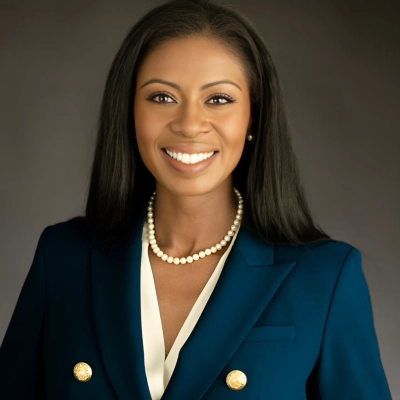 Michele Grant, Founder, Leading at Scale
Choose Trust Over Speed
The hardest call I make with a crew is who gets to lead it, and I pick trust over speed. A lead works alone in someone’s home with a lockbox code. Speed I can coach. Honesty I can’t.
So I weigh two things. Does this person report their own mistakes without being asked? And would the rest of the crew follow them if I stepped away? A lead who quietly hides a chipped counter is one I can’t keep, however fast they clean.
The outcome is a smaller bench than I’d have otherwise. Only 1 in 60 applicants make it through here, and when the bench is thin that can mean saying no to work. I’d rather turn a job down than hand a key to someone I haven’t watched own a mistake. The people who stay are the ones who flag damage before a host finds it.
 Carolyn Vasquez, Founder, Ready Rental Cleaning
Preserve Founder-Led Quality
The most significant decision Joshua and I have made about leadership composition was the decision to remain a two-founder leadership team rather than bringing in additional executive leadership as the business grew from My Swiss Panorama into Luxury Tours Switzerland.
The temptation to expand the leadership tier was real. As we transitioned from a day tour company to a full-service Destination Management Company, the operational complexity increased significantly. Conventional business advice would have suggested hiring a Chief Operating Officer, a head of sales, or a marketing director to distribute the load and bring specialized expertise into the company. We considered it seriously.
The factors that led us to decide differently came down to a few specific realities. First, the quality of our brand is inseparable from the involvement of the two founders in the actual work. Joshua remains hands-on with guide training and sales. I remain personally involved in destination knowledge and strategic direction, and I still occasionally guide high-end tours myself. Adding an executive layer between us and the team would have introduced distance that would have quietly eroded exactly the quality we spent years building. Second, our team of three experience agents and our exclusive guides operate best with direct access to the founders rather than through an intermediary layer. Adding executives to manage them would have been a solution looking for a problem.
What we chose to do instead was invest heavily in documented processes through the EOS framework, giving the team genuine ownership of client outcomes, and adopting operational tools that amplify capacity without requiring additional leadership. That approach has allowed a lean structure to handle significantly more volume than a conventional business of our size typically would.
The outcome has been what we hoped for. Nearly 550 five-star reviews on TripAdvisor. A number one ranking for outdoor activities in Zurich, held consistently. Genuine growth without the dilution of quality that expanded leadership can sometimes cause.
The lesson I would offer is this. Every leadership decision should be tested against a single question. Does this addition genuinely improve the quality of what we deliver to clients, or does it primarily improve the appearance of scale? If the honest answer is the second, the addition is probably a mistake.
Structure exists to serve the standard. Never the reverse.
 Marc Gottwald, CEO & Co-Founder, Luxury Tours Switzerland
Preserve Institutional Memory Through Crisis
The most difficult decision I have faced around team composition came during a period of enrollment decline that put real financial pressure on the school. And what made it hard was not the financial calculation. It was the human one.
At L’Atelier, the faculty is not a workforce. It is a culture. The people who teach here have spent years building something together. Teachers like Ana Pineda, who has been with us for over 23 years, and Isabel Coles, over 22, and Amanda Rodriguez, over 15. These are not employees who could be replaced by finding someone with the same credential. They are researchers who carry the school’s identity inside them. Losing them, even temporarily, would mean losing continuity. And continuity in education is not a convenience. It is essential, for children and for the community they grow up in.
What complicated the decision further was that we also had emergent teachers, people we had been investing in to become a leading team in the future. They were learning to build this culture alongside the veterans. Letting them go meant delaying a vision of a well-rounded, multigenerational faculty that I had been building deliberately.
The factors I weighed were not financial alone. I asked: who carries the irreplaceable institutional memory? Who are the children most attached to? What does continuity require at this specific moment? And what do I owe to the people I have been developing?
What I decided was to keep the veteran core and let the emergent teachers go temporarily, with the full intention of bringing them back. And they did come back when we were able to pay them again.
What I learned is that team composition decisions in a values-driven school are never purely structural. Every person you add or let go changes the culture in ways that take years to feel fully. That weight deserves to be held seriously, not managed efficiently.
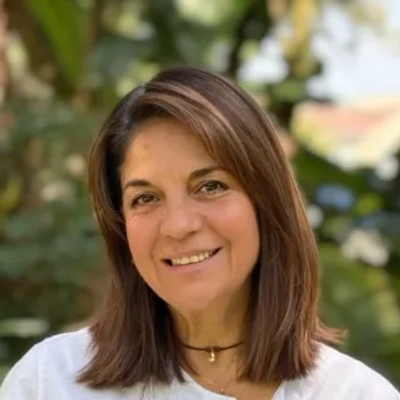 Simonetta Cittadini, Founder and Director, L’Atelier School
Move Leaders Into Better-Fit Roles
The hardest one was an early employee who’d grown into a leadership role. Employee number six or so. They’d been excellent when we were fifteen people, and around forty it stopped working.
What made it hard is that nothing was actually broken. No blowup, no missed quarter. Just decisions arriving slower, and a team that had quietly started routing around them to get answers. That’s a signal you can ignore for a long time if you want to, and I did, for a couple of quarters.
The factor I kept circling was whether this was a skills gap or a wiring gap. Skills you can coach. Someone who genuinely doesn’t want to spend their day on other people’s problems, you can’t coach that, and it’s unfair to try.
It was the second one. So we moved them into a senior specialist role, same compensation, no title spin, and I said plainly in the room that this was my call and my earlier mistake for putting them there.
It worked for about a year. They were much happier doing the work. Then they left for something else, on good terms, and I’d still make the same call.
What I’d tell other founders: loyalty is a reason to be generous with someone, not a reason to keep them in a seat that’s hurting them.
 Abhishek Shah, Founder, Testlify
Split Lanes to Restore Focus
The hardest decision I have made about our leadership team was splitting it in two and taking the smaller half. For a long time I ran everything at Plucky Reach myself: the sample rack, the client calls, the website, the quotes. Production slipped in the weeks I was out selling, sales went quiet in the weeks I was in the factory, and more than one launch shipped only because we stayed in the building overnight. So I handed my co-founder full ownership of growth, the website, the pricing report we publish and the way founders find us, and I kept production and the clients, with one rule between us: nobody overrides the other in their own lane without sitting down first. What I weighed was whether two voices would confuse clients and whether I could watch marketing done differently than I would do it. For the first few months I could not, and I said so. The real return was time and attention. Most of my week went back to the work that built this company, taking a founder from an idea to a finished production run and keeping the quality the same on the five hundredth order as on the first. Clients feel that: we call before they have to ask, and we tell them about a late fabric delivery the day we know. Our on-time delivery has held at 97 percent since the split, and first samples no longer wait on my calendar. The cost is that I no longer know every number the day it happens, and I had to make peace with that.
 Abby Perez, Founder, Plucky Reach
Let Growth Guide Tough Departures
The hardest call I made was letting go of one of my earliest hires. This person joined when we were barely ten firms in, and a lot of our early momentum came from their work. But as we scaled past fifty clients, the role needed someone who could manage a growing team, not just execute tasks well, and that gap became harder to ignore every month.
I sat with that decision for weeks. Loyalty pulled me one way, and the company’s future pulled me the other. In my experience, founders wait too long on calls like this because the person’s past contribution clouds what the role actually needs going forward. I kept asking myself if I was protecting the company or just protecting my own comfort with change.
I finally made the move, and within two months the team hit a stride I hadn’t seen before. New processes stuck. Decisions moved faster. It wasn’t comfortable, and I won’t pretend it was.
But building Chronicle to serve over a hundred firms meant the team had to grow past where any one person started, including me.
 Nikhil Pai, Founder, Chronicle Technologies
Develop Leaders Through Employment
The hardest decision I’ve made about team composition wasn’t about one person. It was about what kind of company I was going to be structurally, and everything about my leadership team follows from it.
Most cleaning companies in my market run on 1099 contractors. It’s cheaper, it’s flexible, and when demand drops you simply don’t schedule anyone. I chose to build Green Planet Cleaning Services on W-2 employees instead. That decision costs real money every month in payroll taxes, workers’ comp and the obligation to keep people working in a slow week, and there’s no quarter where it looks good on a spreadsheet.
The factors I weighed: with contractors you cannot legally direct how the work gets done, which means you can’t train to a standard, and a standard is the only thing a service business actually sells. You also can’t build anyone into a leader. Nobody develops into a supervisor on a platform where they’re a different company every Tuesday. If I wanted a leadership bench, I had to employ people long enough for one to exist.
The outcome, sixteen years in, is that my leadership comes from inside the work. People who have cleaned the homes, met the clients and understand why a standard exists rather than just enforcing it. That’s slower to build than hiring an outside manager with a title, and I’d make the same call again, because an outside hire can run a schedule but can’t tell you what’s actually happening in a client’s kitchen.
My advice to other owners: your leadership team composition is decided years earlier, by your employment model. If your structure makes long tenure impossible, you don’t have a hiring problem, you have a structural one, and no amount of recruiting fixes it.
 Marcos De Andrade, Founder & Owner, Green Planet Cleaning Services
Remove Toxic High Performers
I once had to let go of a high performer who was poisoning the team. She hit her numbers every quarter, but she undermined her colleagues, refused to take feedback, and everyone was walking on eggshells around her. I kept weighing her performance against what was happening to the rest of the team, and whether we were losing good people because of her.
The decision got easier when I noticed the pattern: talented people were leaving, and when I asked why in exit interviews, her name kept coming up. Three months after she left, the team started actually collaborating instead of just coexisting. We beat her old benchmarks without her.
What I took from it: one person’s results don’t justify breaking everyone else. I work as a coach now, and I help leaders spot this earlier than I did. Building a team is one thing. Knowing when you need to cut someone loose to protect it is another.
 Samka Keranovic, Founder, Drwmbs
Replace Mission-Misaligned Operations Leadership
I had to replace our head of operations when we were working on carbon neutrality. The person knew the technical side but pushed back on the environmental goals I’d set. I had to weigh loyalty against whether they actually believed in where we were going.
What I learned: you can teach someone new skills, but you can’t teach them to care about something they don’t. If a leader isn’t on board with the core mission, they become a drag on everyone else. I hired someone who got both the safety requirements and the sustainability piece. We hit carbon-neutral operations ahead of schedule and ended up setting benchmarks for the industry.
When you’re building a leadership team, cultural fit isn’t some soft HR concept. It’s the thing that actually matters, especially if you’re trying to change how an entire industry operates.
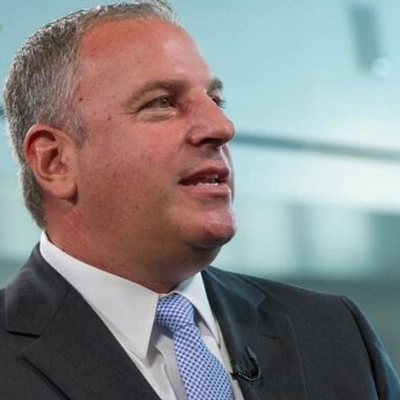 Dean Rotchin, CEO at BLACKJET, BlackJet
Delay Marketing Hire Until Ready
The hard leadership composition call on APMZEE was deciding not to hire a full-time marketing lead before the claim gate and pack-out rhythm could absorb another seat. Factors were volume (a few hundred customers a month, about 6 ad hooks drafted with ChatGPT then human claim review, roughly 10 customer calls a month) and whether a new hire would own customer-facing lines or just add revision loops. Lean Sonics already stretched founder attention across venture weeks.
Outcome: we kept a small DTC team and strengthened founder-plus-operator coverage instead of adding a title into a messy floor. Marketing stayed founder-led with a named claim gate. Capacity and ownership beat headcount optics. The team stayed coherent, and day-3 and day-24 emails still had a human owner. That was the composition call, not a dramatic firing story.
 Neill David Watson, Founder, APMZEE
Center Patient Outcomes
When founding Evolve, I had to decide whether to staff leadership roles with therapists deeply rooted in high-volume models or build around those open to our one-on-one, root-cause approach drawn from my Tel Aviv work with complex trauma cases. The key factors were alignment with long-term patient outcomes over short-term volume and willingness to handle conditions like EDS and chronic pain that others often avoid.
I selected a smaller core team of clinicians who shared the hands-on philosophy from my MSU training and early rehab center experience. This meant passing on faster hires with traditional backgrounds to invest in new grads we could mentor directly.
The result was a unified group that delivers customized plans across our Brooklyn locations, attracting patients who need more than generic exercises. It also positioned us for specialized programs without diluting our focus on functional movement and injury prevention.
 Lou Ezrick, CEO, Evolve Physical Therapy + Sports Rehabilitation
Put Classroom Outcomes First
With 17 years in early childhood education, including growing from teacher to Executive Director at the same school, I’ve had to make real calls about who belongs in a leadership role — not just who’s been there longest.
The hardest decision I faced was restructuring how we handled our multilingual programming lead. We had a warm, experienced staff member who families loved at pickup. But our Polish-language kindergarten and the gifted enrichment program needed someone who could actually drive curriculum cohesion across three languages — not just be a friendly face. Those are very different skill sets.
The factor that ultimately guided me: what does a child experience inside the classroom, not outside it? When I audited our kindergarten readiness outcomes and saw where the gaps were, it became clear the role needed someone whose strength was instructional design and language integration, not relationship management at the door.
The outcome was uncomfortable short-term but the right call. Our kindergarten graduates’ acceptance into gifted programs became something we could stand behind consistently — not as a lucky streak, but as a repeatable result tied to deliberate staffing decisions.
 Beata Bielic, Executive Director, Fantasy Island Schools for Kids
Redesign Roles Around Client Complexity
Running an HR consulting firm for 17+ years means I’ve had to make hard calls about who sits in key roles on my own team — not just advise clients on theirs.
The toughest one was realizing that a long-tenured HR Business Partner, someone I genuinely liked, was a great executor but couldn’t operate independently with clients. The work was expanding into more complex, multi-state engagements and I needed people who could lead client relationships, not just support them. Loyalty and tenure weren’t enough criteria anymore.
What helped me decide was going back to the organizational design work I do with clients — essentially applying it to myself. I mapped out what the “seat on the bus” actually required going forward, then honestly assessed whether the person could grow into it or was already at their ceiling. That separation of “do I value this person” from “does this person fit this role” is brutally hard but necessary.
The outcome was a restructured role that better matched her strengths, and a new hire who could handle the client-facing complexity we needed. Keeping her in a redefined capacity preserved institutional knowledge without stalling growth. The lesson: when your business evolves, your org chart has to evolve with it — and waiting too long to make that call is its own decision with real consequences.
 Cristina Amyot, President, EnformHR
Prioritize Logistics Over Design
Having spent over three decades leading Art & Display alongside a team with over 75 years of combined experience, my toughest leadership decision was pivoting our core leadership focus away from pure design toward heavy logistics execution.
I restructured our executive team to elevate a dedicated operations and labor coordinator over an additional creative director. The critical factor was recognizing that even the most stunning booth concept fails if union labor jurisdictions, freight handling, and strict venue timelines aren’t managed with total precision.
That shift allowed us to deliver seamless, stress-free builds for clients like Willow Industries and Google without costly on-site delays. It anchored our company’s reputation on reliable execution and accountability rather than just surface-level design.
 Loren Gundersen, CEO, Art & Display
Choose Leaders Who Understand Gaps
Building AL-Care’s team meant making a genuinely hard call early on: do I surround myself with people who know healthcare deeply, or people who know how to *build* organizations? I chose both, but that created real tension when advisor slots were limited and priorities competed.
The toughest moment was deciding to bring on Steve Hourigan as a board member over a well-connected local healthcare administrator. Steve’s background scaling companies through 10 exits and 20+ boards meant he understood capital-efficient growth, not just healthcare optics. That mattered more for where AL-Care was headed than name recognition in the room.
What I didn’t anticipate was how much the mission itself would become a filter. When Trish Kane came in, she brought something clinical experience alone couldn’t — she’d *been* the patient, survived a coma, two strokes, and rebuilt her life through community. That lived experience reshaped how we think about care navigation in ways a resume never could.
The factor I’d tell anyone to weight heavily: does this person understand the *gap* you’re filling, not just the industry you’re in? AL-Care exists because families facing lung cancer and glioblastoma fall through cracks. I needed leaders who felt that gap personally, not just professionally.
 Frank Leonard, Founder, AL-Care
Assign Leadership Beyond Technical Skill
As the qualifier and principal for a Naples roofing and GC company, I’m legally and practically accountable for work across tile, shingle, and metal roofs in four Southwest Florida counties. One hard call was deciding that leadership could not be based only on who was the fastest installer.
I had a very skilled field person who was excellent on the roof, but struggled with documentation and customer communication. I chose to put project leadership in the hands of someone who was stronger at explaining underlayment, fastener patterns, wind ratings, permits, and inspection requirements in plain English or Spanish.
The factors were simple: Florida code compliance, storm-season risk, clean paperwork for inspectors or adjusters, and whether the person could keep a homeowner, builder, or property manager informed before problems grew. In roofing, a missed detail can become a leak, a failed inspection, or an insurance headache.
The outcome was better accountability. The technical installer stayed valuable in the field, but the customer-facing lead made projects more predictable, especially on replacements and storm restoration work where communication matters as much as craftsmanship.
 Carlos Legrand, Owner, Legrand’s Roofing & Construction LLC
Balance Handler Temperaments
Running Master of Hounds Academy with over two decades in the dog training industry meant making deliberate choices when shaping our leadership structure. Early on, I had to decide whether to build our core leadership exclusively around high-drive working dog trainers or establish a more holistic, personality-driven partnership.
I evaluated how different handler temperaments impact training, recognizing that having only hard, authoritarian styles creates blind spots when rehabilitating sensitive dogs. I chose to anchor our leadership alongside co-founder Kylie Ghim, blending our combined 30 years of experience to pair assertive control with nuanced behavioral methods.
This leadership balance allowed us to build the Metcalf Method, successfully overseeing everything from 4-6 week board-and-trains to Canine Circus School classes. Structuring our leadership around complementary strengths ensured we could balance out any dog’s behavioral deficits rather than forcing a one-size-fits-all approach.
 Francis Metcalf, Founder & Co-Owner, Master of Hounds Academy
Embed Clinical and Lab Expertise
Over 18 years directing Just Wright Dental and Implant Center in Corsicana, Texas, my toughest leadership call was transitioning our executive structure away from traditional dental practice managers to embed dedicated in-house lab and medical directors.
When performing complex full-arch reconstructions with zygomatic and pterygoid remote-anchorage implants for patients told they had “no bone,” relying on outside lab timelines and conventional clinical oversight simply did not meet our standard. I weighed the disruption of reorganizing our leadership against our core philosophy to treat the patient, not just the teeth.
I restructured our leadership team to bring in an on-staff board-certified anesthesiologist for advanced sedation and a dedicated digital workflow director to oversee our 12 CAD/CAM mills and 4 3D printers.
That shift eliminated outside-lab dependency entirely, allowing our team to design custom, same-day full-arch smile restorations with absolute precision for patients who travel to us from across Texas and nationwide.
 Justin Wright, Founder & Clinical Director, Just Wright Dental and Implant Center
Elevate Field Mentors for Service
As President of Kelley & Dawson Service, leading a company with nearly 60 years of family-driven history means making tough calls on how we structure our operational leadership.
When evaluating our field leadership composition, I had to balance technical expertise across heating, mini-splits, and indoor air quality with our commitment to dependable 24/7 emergency service. I focused on placing leaders who strictly uphold meticulous safety standards–like thorough heat exchanger and combustion testing–while actively mentoring technicians in the field.
Restructuring our team around dedicated service and installation leaders strengthened our response times and overall quality control. It ensured our technicians can consistently diagnose and resolve urgent repairs within an hour, maintaining the meticulous care our Wichita community relies on.
 Michelle Maes, President, Kelley & Dawson Service
Integrate Design and Construction
Over my two decades leading Sure-Fix Remodeling in Easton, Pennsylvania, one of my toughest leadership decisions was restructuring how we managed our design and build operations. We had to choose between bringing on traditional corporate project executives or creating a dedicated in-house design partnership.
I weighed our core commitment to transparent project management against the risk of taking on heavy big-firm overhead. The deciding factor was ensuring our leadership directly guided homeowners through every phase of the design-build lifecycle.
Transitioning to an integrated design leadership model tied directly to our in-house showroom eliminated communication gaps between design and structural site work. It allowed our leadership team to stay lean and hands-on while delivering complex luxury renovations.
 Henry Rouhana, Owner, SURE-FIX Remodeling
Select Independent Scientific Advisors
As founder of Pristine America, I had to build a leadership/advisory structure for something that lives or dies on trust: an outcome-based soil and food-quality standard.
The difficult decision was not to fill the Scientific Advisory Council with friendly voices, donors, or people who already agreed with us. I chose independent experts across soil science, water, agronomy, economics, and food/regulatory claims, with no financial interest in Pristine America.
The factors were simple: credibility, independence, and whether the person would challenge the methodology before the public ever saw a score. That also shaped our lab strategy: producers don’t pick the lab, don’t control the result, and don’t get to publish only the flattering data.
The outcome is slower, but stronger. If your mission depends on measurement, the leadership team cannot be built around loyalty first; it has to be built around people who make the work harder to fake.
 Vic Parulkar, Founder, Pristine America
Define Mission-Based Success Profiles
I have had to make difficult calls on leadership team composition when it became clear that the mission required different leadership behaviors than the team had been built for. In those moments, I start by defining a clear success profile for the role, including the top outcomes the leader must deliver in the first three to six months. I also separate true cultural alignment from familiarity by focusing on shared mission and values, while still welcoming different perspectives and working styles. We then use structured interviews with consistent questions to evaluate how candidates communicate, make decisions, build relationships, and lead through challenges. The deciding factors are measurable competencies, the ability to deliver against the success profile, and alignment with the organization’s expectations for leadership. The outcome is a leadership team that is selected with more clarity and fairness, and roles are filled by people chosen for what the mission needs rather than what feels comfortable.
 Jon Schneider, President and Founder, Recruiterie