


Creating a workplace that consistently produces innovative solutions requires more than good intentions—it demands specific practices and structures. Industry leaders who have built thriving creative cultures share proven strategies for protecting time, empowering teams, and turning ideas into tangible results. This article compiles insights from experts who have successfully implemented these approaches across their organizations.
- Restore Energy With 4 PM Fridays
- Give Teams Real Authority
- Use Scarcity to Spur Ownership
- Create Shared Vision Each Summer
- Match Strengths to Business Needs
- Welcome Half-Formed Ideas
- Let Customer Interviews Guide Products
- Demo Rough Prototypes in Roadmap Reviews
- Turn Observations Into Experiments
- Redesign Live Events for Audiences
- Mix Teams During Friction Sessions
- Fund Risk-Free Experiments
- Close the Idea Feedback Loop
- Protect Unscheduled Time
- Unite Disciplines Before Development
- Shape Ideas Around Customer Needs
- Challenge Assumptions Before Litigation
- Balance Freedom With Brand Structure
- Test Ownership Through Weekly Sprints
- Invite Unfinished Ideas
- Expand Skills With Skill Lake
- Apply Believable Usable Repeatable Filters
- Empower Problem Finders
- Ask How Work Improves
- Provide Mentorship and Growth
Restore Energy With 4 PM Fridays
I fired someone for working too hard, and it was one of the best decisions I ever made for company culture.
When we were scaling my fulfillment company past $5M, I had a warehouse manager who’d show up at 5 a.m. and leave at 9 p.m. He was crushing it operationally, but his team was miserable. People started calling in sick more. Two good employees quit. I finally pulled him aside and said if I caught him in the building past 6 p.m. again without a genuine emergency, he was done. He thought I was joking until I wrote him up the next week.
Here’s what I learned: creativity dies when people are exhausted, and innovation requires space to think. You can’t solve problems when you’re just surviving the day. After that manager left (he chose to quit rather than work normal hours), I implemented what we called “4 p.m. Fridays.” Every Friday at 4 p.m., the entire company stopped working. Not optional. We’d either do something together or just go home, but the building had to be empty by 4:30.
The first month, productivity dropped maybe 3%. By month three, we’d implemented six new process improvements that came directly from people having mental bandwidth to think. One warehouse associate suggested a zone-picking system that cut our pack time by 18%. She told me later she’d been thinking about it for months but never had the energy to map it out until she had Friday afternoons free.
Purpose comes from feeling like your ideas matter and you’re building something bigger than yourself. I couldn’t tell people their work had meaning while simultaneously grinding them into dust. The companies that win long-term understand that innovation isn’t about working harder, it’s about creating conditions where people have the energy and psychological safety to challenge the status quo. When I built Fulfill.com, I baked that philosophy in from day one. We don’t celebrate all-nighters. We celebrate the person who found a smarter way to work.

Joe Spisak, CEO, Fulfill.com
Give Teams Real Authority
Creativity is a state before it is a skill, and the environment sets the state. Under threat, the brain narrows toward habit and fast pattern completion, and the capacities carrying judgment and creative synthesis are the first to go. Psychological safety is not a comfort measure. It is an attention budget. People managing how they are perceived are spending the exact resource original thinking requires. The signal that sets it is small and unmistakable: how a leader responds the first time someone disagrees. Everything after that is interpretation.
Purpose follows authorship. People feel purposeful when they build the system they work inside rather than receive it. And the aim is not a team that agrees. Groups that lose the capacity to differentiate stop producing anything new. What you want is a team that can move in and out of disagreement without threat.
I ran both sides of this at Microsoft: the release that failed and the reengineering that followed. Visual Studio planned a 24-month release that took 39 months, fifteen months late, peak bug backlog over 30,000, estimating variance 50 to 600 percent, low morale and heavy turnover after ship. Later that year, I led the executive team through naming the culture they actually wanted. They named it pride in how we build the right product.
So we stopped. For four months, the entire division did no new product development, to clear the debt and rebuild the system. I structured it as the people’s milestone. More than 120 improvement proposals came from the people doing the work, and we executed on 32 of them.
The next release shipped in 18 months, about two months off plan, with a variance of 10 to 15 percent, a net gain of 640 features at a higher quality bar, and six months later, the top spot in development platform tool quality amongst their competitors. What I wrote at the time still matters more to me than the numbers: we had a lot of fun, and some of the best friends of my twenty years at Microsoft came out of that stretch.
Trust, safety, and real authority are the conditions under which a nervous system will risk an original idea. We built them deliberately, and 640 of them showed up. What was invisible then is measurable now. A team’s physiology, heart rate, and arousal moving together under pressure predict its decision quality better than the team’s own rating of its discussions.
That is my work now: I measure and engineer the human system the way a performance engineer does a digital one.

Carol Grojean, Consultant, Grojean Consulting
Use Scarcity to Spur Ownership
I’m Runbo Li, co-founder and CEO of Magic Hour. The honest answer is that creativity doesn’t come from ping pong tables or unlimited PTO policies. It comes from constraint.
David and I run a platform with millions of users as a two-person team. That’s not a flex about working hard. It’s a deliberate architectural decision. When there’s no one to delegate to, every problem becomes a creative problem. You can’t throw bodies at it. You have to think differently about what’s possible.
Here’s the specific example. Early on, we needed customer support, marketing copy, bug triage, user research, and onboarding flows. A normal startup would hire five people. We built AI systems to handle each of those functions, then spent our creative energy on the things only humans can do: taste, intuition, and storytelling. That single constraint, staying at two people, forced us to innovate on process every single week. We didn’t have the luxury of doing things the old way.
The principle I’d name is “creative pressure through scarcity.” Most companies kill creativity by adding resources. More people means more coordination, more meetings, more consensus-seeking. Every additional person dilutes the sense of ownership. When you’re a team of two and something breaks at 2 AM, there’s no ambiguity about who owns it. That ownership is what creates purpose. You’re not filling a role. You’re building something that wouldn’t exist without you.
If I were advising a larger team, I’d say: make the unit of ownership as small as possible. Give one person full responsibility for an outcome, not a task. Let them feel the weight of it. That’s where creativity lives, not in brainstorm sessions with sticky notes, but in the moment where you realize no one is coming to save you and you have to invent your way forward.
Purpose isn’t something you hand people in an all-hands meeting. It’s something they feel when the gap between their effort and the outcome is zero.

Runbo Li, CEO, Magic Hour AI
Create Shared Vision Each Summer
The most honest answer I can give is that you don’t create that environment once. You build the conditions for it every single day, and then you protect those conditions with the same intention you bring to everything else.
At L’Atelier, the work environment is not separate from the pedagogical environment. They are the same thing. The spaces that speak to children speak to teachers too. The materials that invite children to investigate invite adults to investigate alongside them. The culture of asking why before deciding what applies to teachers planning a learning experience and to me leading a faculty meeting. Everything is held to the same standard. That consistency is what makes it feel real rather than performed.
The specific example I keep returning to is what happens every summer at L’Atelier. Two full weeks before the school year begins, the entire faculty comes together not to plan activities or set up classrooms, but to revisit the school’s purpose and define a shared vision for the year ahead. We ask ourselves: why do we do what we do? What does our context ask of us this year? What did we learn last year that we need to carry forward, and what do we need to relaunch?
At the center of that process is prefiguration. Before we decide what we will do, we understand why it matters. Not the tasks. The meaning behind the tasks. That distinction changes the quality of everything that follows.
What this produces is a faculty that enters the school year not executing a plan someone handed them, but living a vision they helped construct. The sense of purpose that comes from that is not manufactured. It is earned. And it sustains people through the difficult moments, the days when something doesn’t go as expected, the weeks when the work is hard. They know why they are there. That knowledge is the environment.
Simonetta Cittadini, Founder and Director, L’Atelier School
Match Strengths to Business Needs
For me it usually comes down to letting people own a piece of the outcome instead of just handing them a script or a task list. Looking back, the times my team actually got creative weren’t because I told them to be creative, it was because I gave them a real problem and got out of the way. A good example of that, one of my reps kept mentioning he’d built relationships with pro athletes and trainers just from his own workout habits, so instead of boxing him into a normal sales role, I let him build an entire channel around that, showing up at athlete gyms and events on his own time and figuring out how to turn those relationships into something useful for the business. That took way more initiative and creative thinking than anything I could have assigned him, because he actually cared about it and had skin in the game. I try to do that across the team, find what someone is naturally curious about or good at, and connect it to something the business needs, instead of forcing everyone into the same lane. Purpose tends to show up on its own once people feel like their specific strengths matter and aren’t interchangeable with anyone else on the team.
Seth Berge, Founder, CEO, Regenerative Revival
Welcome Half-Formed Ideas
I think creativity dies pretty fast when people feel like every idea has to arrive fully baked and defensible. So one thing I try to create is room for half-formed thinking—throwing out a weird angle, challenging the obvious answer, or saying “this might be dumb, but…” without getting smacked down for it. At Prose, we’ll often brainstorm around a client problem before anyone worries too much about execution, budget, or whether the idea fits neatly into a box. That separation matters, because if you introduce constraints too early, people start self-editing before anything interesting has a chance to emerge. The sense of purpose comes from tying the work back to a real outcome: who are we helping, what are we trying to change, and why does this actually matter? People tend to do much better creative work when they understand the point of the assignment, not just the deliverable.

Justin Belmont, Founder & CEO, Prose
Let Customer Interviews Guide Products
I think people do their most creative work when they understand what we’re trying to achieve and feel comfortable questioning how we get there. With Jolene, the purpose is simple: helping women feel confident in their clothes. I try to keep that customer need at the centre of conversations and make space for ideas, regardless of who they come from.
One example is involving customers in product development through interviews. Hearing honestly about the outfits they struggle with and what they wish existed has helped shape our thinking around new products, including a potential lift solution. It gives the people working with me a real problem to solve and the freedom to explore different answers. For me, that’s where creativity and purpose come together.
Rebecca Hunter, Founder & CEO, Jolene
Demo Rough Prototypes in Roadmap Reviews
Most of our best product ideas came from people on the team doing the job the software is meant to do. We’re small, and everybody here, engineers included, runs real searches in our own product for our own open roles. Sounds trivial. It’s most of the mechanism, because you can’t manufacture a sense of purpose in a kickoff deck when somebody just watched a recruiter burn an hour on a bad search.
The one practice I’d point at is how we run roadmap reviews. Nobody gives a status update. People demo half-finished things, polish is discouraged, so somebody shows a broken prototype and the room argues about it for twenty minutes. A good chunk of what shipped, including the work that cut manual sourcing time by roughly 90% for our customers, started as a weekend hack nobody asked for.

Steven Lu, CEO, Pin.com
Turn Observations Into Experiments
I create room for people to test ideas without having to prove in advance that they will work. In R&D, an unsuccessful experiment is not wasted effort if we understand why it failed. The expectation is simple: bring evidence, question assumptions and share bad results as openly as good ones.
We recently had a crystallization process that produced the right material, but filtration was painfully slow. The easy response would have been to accept the long processing time and move on. Instead, I brought the scientists and production team together and asked everyone, including the operators handling the material, what they were seeing.
One observation changed our direction. A batch left undisturbed overnight at a lower temperature filtered much faster and produced noticeably larger particles. We designed follow-up experiments around temperature, holding time and mixing rather than treating it as a lucky accident. That gave us a practical path toward a more scalable process.
People feel purpose when they can see their observation turn into an experiment, and then see that experiment improve the operation. My role is not to supply every answer. It is to make sure good questions can come from anywhere and receive a fair test.
Vardan Ter-Antonyan, Founder and Managing Principal, Ter-Antonyan Consulting LLC
Redesign Live Events for Audiences
At Beverly Boy Productions, creativity means refusing the default template when the venue and the moment demand more.
For Carvana’s Atlanta live event with Big Boi, we weren’t shooting a conventional ballroom—it was an unconventional outdoor nighttime set at a glass-tower car vending machine. A standard event-video approach would have flattened it. We built a cinematic multi-cam live-event workflow instead (Steadicam, jib, multiple cameras), with clear on-set leads so the creative call could hold under live pressure.
The point of that environment isn’t “be creative.” It’s to give the team permission and structure to redesign the run of show around what the audience actually feels—then execute it once, live.
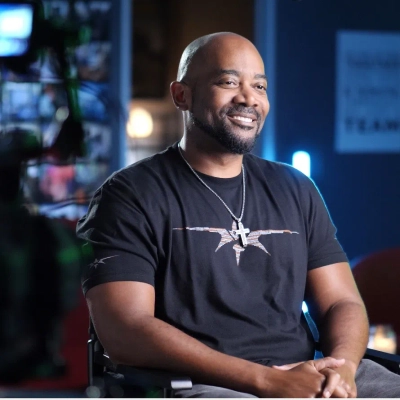
Tavares Beverly, Founder and CEO, Beverly Boy Productions
Mix Teams During Friction Sessions
Every quarter I pull my product team, my customer service reps, and my warehouse staff into the same room for what we call a “friction session.” No agenda slides, no hierarchy. The only rule is that you have to bring one real customer complaint or one idea you haven’t had permission to chase.
I sit in that room and pitch my own half-baked ideas right alongside everyone else, and I’ve been wrong plenty of times in front of the whole group. When people see me get corrected and hear me say “good catch,” they stop filtering themselves.
One session, a warehouse associate flagged that customers kept ordering the wrong size orthotic because our website sizing guide assumed people already knew their arch type. Nobody on the product team had caught it because they weren’t handling returns. A customer service rep sketched a simple quiz flow on a whiteboard, and within weeks we had a working version on the site. Returns in that product category dropped after that.
If you want to copy it, block 90 minutes, mix departments, and have leadership go first with an imperfect idea. I give people dedicated time to chase problems outside their usual scope, and I pair that with simple collaboration tools, like a shared whiteboard or a quick prototype workflow.

Ben Frederick, Founder, Dr. Frederick’s Original
Fund Risk-Free Experiments
Creativity is a budget question more than a personality question. People produce new ideas when a failed one costs them nothing, and in most companies a failed idea costs the person who raised it a small amount of credibility. That is the entire reason your team keeps proposing safe things.
The specific thing we do is a fixed number of hours every month that anyone can spend testing something without asking permission, on one condition: they report what happened either way. Reporting a failure is the requirement, not the risk. The first time somebody stood up and said, “This did not work, and here is why,” and nothing bad happened to them, the volume of ideas changed permanently.
On purpose, be concrete. Nobody feels purpose from a mission statement. They feel it when they see the specific human their work affected. We started sharing client messages, the ordinary ones, in full. A small business owner describing what changed for them does more than any values exercise I have ever run.

Raphael Larouche, CEO, Renaissance SEO
Close the Idea Feedback Loop
Creativity does not come from perks or brainstorming sessions. It comes from people believing that a suggestion will actually be read, tested, and either used or explained away. Most teams stop offering ideas not because they run out, but because the last three went nowhere. So the environment starts with a visible path from idea to decision, and with leaders who explain their reasoning rather than just their conclusions. Purpose follows the same logic: people need to see the line between what they do and who it helps.
One specific example: our team at VA Masters runs a monthly session where anyone, at any level, brings one process that wastes their time. We pick one or two, assign an owner, and report back the next month on what changed. It is unglamorous, but it works, because the feedback loop closes in public. People stop treating improvement as someone else’s job once they have watched their own idea ship.

Alon Pearl, Founder & CEO, VA Masters
Protect Unscheduled Time
On the sourcing trips I run, I stopped scripting the days down to the hour. There’s a factory tour in the morning, and then a long block in the afternoon with nothing assigned to it. Entrepreneurs sit around a table comparing what they just saw, and someone always says the thing that changes another person’s whole product idea. That unscheduled block does more for their businesses than any session I could have planned.
I use the same structure now that I’m building AI products solo. Mornings are for shipping something narrow and defined. Afternoons are unassigned, which is where I test tools that aren’t obviously useful yet, break my own workflows, and follow the thread that has no deliverable attached. Almost every product idea I’ve launched came out of that second block.
So when I think about a work environment, I think about how much of the calendar I leave empty on purpose. When every hour has an owner and an output, I hit the output and stop thinking. If I look at where my good ideas came from last quarter and none of them came out of scheduled time, I protect the unscheduled time first.

Will Mitchell, Founder, StartupBros
Unite Disciplines Before Development
For us, meaning isn’t something we cultivate alongside our work; our mission is our customer loyalty strategy. Each team member works toward a specific and original goal: to make deep meditative states and psychedelic-like experiences accessible through technology, without requiring years of practice or medication. This mission is unique enough that those drawn to it are already receptive to it before they even walk through our doors.
Our creativity stems from a refusal to compartmentalize disciplines. One of our co-founders, Asa, is both a sound engineer and a meditation teacher; it’s not a matter of two people taking turns with the work, but a single individual who possesses both the technical expertise and the practical experience. We ensure that every decision concerning our products is made in this way: involving the engineer and the practitioner from the outset, rather than letting a team of engineers develop a product and a wellness team react afterward. Innovation emerges at the intersection of disciplines, and it only reveals itself if people who understand these different aspects engage in dialogue before development even begins, and not after.

Murray Seaton, Founder and CEO / Health & Fitness Entrepreneur, Sage Space
Shape Ideas Around Customer Needs
I try to make it easy for someone to bring an idea forward before it looks finished. My role is to make the customer need clear and help the team develop something we can review together.
At Domepeace, customers have been asking about our Mattifying Scalp Moisturizer. For an upcoming email, we prepared a short update from me in Slack and captured it as a screenshot to use as the creative. The email hasn’t been sent yet, but we have the core visual prepared.
What I like about that example is that the creative idea starts with something customers actually care about. The team can explore an unusual format while staying connected to a clear purpose: answering people who are waiting for an update.
That’s the environment I want to create. People should feel comfortable showing an early idea and know I’m willing to help develop it. When we review the work, I want the conversation to focus on whether it answers the customer’s question and what would make it more useful.
Abel Disla
Founder & CEO, Domepeace
Abel Disla, Founder & CEO, Domepeace
Challenge Assumptions Before Litigation
Creativity at work often improves when hierarchy matters less during analysis and more during final decision-making. In a legal environment, junior team members frequently notice practical issues that senior lawyers overlook because they are closer to scheduling records, intake facts, or document flow. A purposeful culture gives those observations weight. That does not dilute leadership. It strengthens it by ensuring strategy is informed by the people who see how a case actually develops day to day.
One specific example I use is a file handoff meeting before litigation intensifies, where each person must identify one assumption built into the case. That question consistently surfaces overlooked exposure, from notice problems to inconsistent descriptions of injury. It invites original thinking while keeping the mission clear, which is protecting credibility before it becomes contested.

Chrissy Grigor, Personal Injury Lawyer & Founder, Grigor Law Injury & Car Accident Lawyers
Balance Freedom With Brand Structure
For me, creating the right work environment means having both structure and creative freedom. I like to have a clear direction, but I also make sure there is enough space to explore new ideas without feeling that every idea has to lead to a finished product.
For example, when I’m developing a new collection for Inprint Designs, I give myself time to explore different colors, compositions and visual directions before making any final decisions. Once the ideas start coming together, I step back and look at which pieces truly fit the collection and the overall identity of the brand.
This balance between freedom and structure helps me stay creative while keeping a clear sense of purpose. It allows new ideas to develop naturally, while making sure the final work still feels considered, consistent and meaningful.
Indre Saveike, Founder, Inprint Designs
Test Ownership Through Weekly Sprints
Creativity starts with autonomy, but innovation requires direction. I strive to build work environments where people know the business objective, understand why it matters, and have enough ownership to test solutions before everything is perfect.
One specific example is the weekly innovation sprint I use with founders and teams. We pick one real business constraint—customer acquisition, positioning, onboarding, workflow friction, or sales follow-up—and give the team a short window to test one practical improvement. The goal is not to create a polished final product. The goal is to learn quickly enough to make a better commercial decision.
This approach comes from entrepreneurial work: building ventures, commercializing products across AI, SaaS, government technology, and consumer goods, and coaching founders through the practical gap between idea and revenue. Through Steven Mitts Services, I work with founders to turn raw ideas into tested offers, sharper positioning, repeatable sales motions, and operating rhythms that support growth. That experience has reinforced a simple distinction: creativity is idea generation. Innovation is when those ideas survive contact with customers, systems, and revenue.
My view is simple: people are more creative when they are trusted with ownership, but they are more innovative when that ownership is tied to a clear commercial outcome. Purpose gives creativity direction. Systems make it repeatable.
— Steven Mitts, Founder & CEO, Steven Mitts Services

Steven Mitts, CEO, Founder
Invite Unfinished Ideas
Do not trust the standard levers here. Perks do nothing. A little over 50 of us, all remote, so most of them were never on the table anyway. What actually changed things was a rule about unfinished work. Anybody can bring a half-formed idea to a call without having to defend it or build it. Our HR lead suggested a small bot that posts updates into our channels so they stopped writing the same message four times a week. The tech team had it running in a day.
Purpose is the part I am least sure about. You cannot hand it to somebody over a call. Recognition and being listened to cost nothing, which is either a boring finding or an uncomfortable one. I ask what got dropped last week at the top of every Monday call, no consequences attached.

Sahil Agrawal, Founder, Head of Marketing, Qubit Capital
Expand Skills With Skill Lake
Creating a work environment that fosters creativity and innovation starts with giving employees the freedom to share ideas, learn continuously, and take ownership of their work. Employees are more likely to contribute creatively when they have opportunities to develop new skills, explore different approaches, and understand how their work connects to a larger purpose.
One example is using Skill Lake to support continuous learning and development. Employees can access learning based on their roles and development needs, which gives them opportunities to build new skills and explore areas beyond their day-to-day responsibilities. This kind of learning environment can encourage people to bring new ideas to their work, experiment with different approaches, and feel more confident contributing to improvements within the organization.
Geethu Lakshmi, Assistant Manager – People Ops, Skill Lake
Apply Believable Usable Repeatable Filters
A creative environment becomes durable when curiosity has constraints. In founder-led companies, innovation often stalls because every idea is treated as equally urgent, or because people chase novelty without defining what problem deserves attention. Purpose sharpens when the team knows the boundary conditions: scientific credibility, customer trust, margin discipline, and ease of use all matter at the same time.
One example: we built decisions around a simple filter called believable, usable, repeatable. An idea was not considered creative unless it could be explained clearly to a customer, function reliably in ordinary homes, and still make sense six months later after returns data and support conversations. That framework led to fewer flashy launches, more practical innovation, and noticeably better cross-functional alignment.
Michael Collins, Founder, Earthbound
Empower Problem Finders
The thing that kills ideas here has never been culture. It is distance. Someone finds a problem on a Tuesday.
Getting it fixed takes three approvals plus a place on someone else’s backlog. By the time the dust clears, the finding person has stopped caring, and, crucially, they’ve learned never to mention the next problem. This is how a company goes quiet without any executive deciding that it should. Accordingly, we stopped running idea programs and started collapsing the distance. Anyone who finds a problem gets first dibs to fix it.
Small projects, no committee, you inform stakeholders afterward, not as a prerequisite.
Purpose is the place everyone really screws up. No one I’ve ever worked for gets their motivation from a mission statement on a wall. They get it from watching something they deployed change a metric or seeing a customer explain a pain point they themselves solved.
Reporting and visibility, not ethics.
Where this fails is it’s not sustainable without identifying a class of things no one’s allowed to touch. Billing and security. It took us too long to define that boundary, but we learned by doing it.

Abhishek Shah, Founder, Testlify
Ask How Work Improves
I think creativity increases when people feel safe to share ideas without being concerned that every idea needs to be perfect. At uKnowva HRMS, I try to create an environment where people can talk openly, suggest changes, ask questions about the way things are done, and look for ways to do things.
For instance, while working on content, I have suggested making the way complex HR features are explained simpler for users to understand. Instead of just using the current method, we talked about what would make the information more helpful and easy to use.
That moment made me realize that innovation usually begins with letting people ask, “Can we do this better?”
Nilakshi Garg, Marketing Lead – Content & Community, uKnowva HRMS
Provide Mentorship and Growth
I create a work environment that supports creativity and innovation by focusing on the everyday employee experience, not a polished message about culture. At HHJ Trial Attorneys, one specific way we do this is by ensuring every employee has access to learning and mentoring so they can grow and do work they are genuinely passionate about. That combination gives people room to bring new ideas forward because they feel supported by peers and leaders, not judged for speaking up. It also builds a clear sense of purpose, since people can see how their development connects to the impact of the work. Most importantly, we do not ask employees to follow a script or project an image, because authenticity is what makes a culture real.
Elliott Jung, Founding Partner at HHJ Trial Attorneys, HHJ Trial Attorneys