

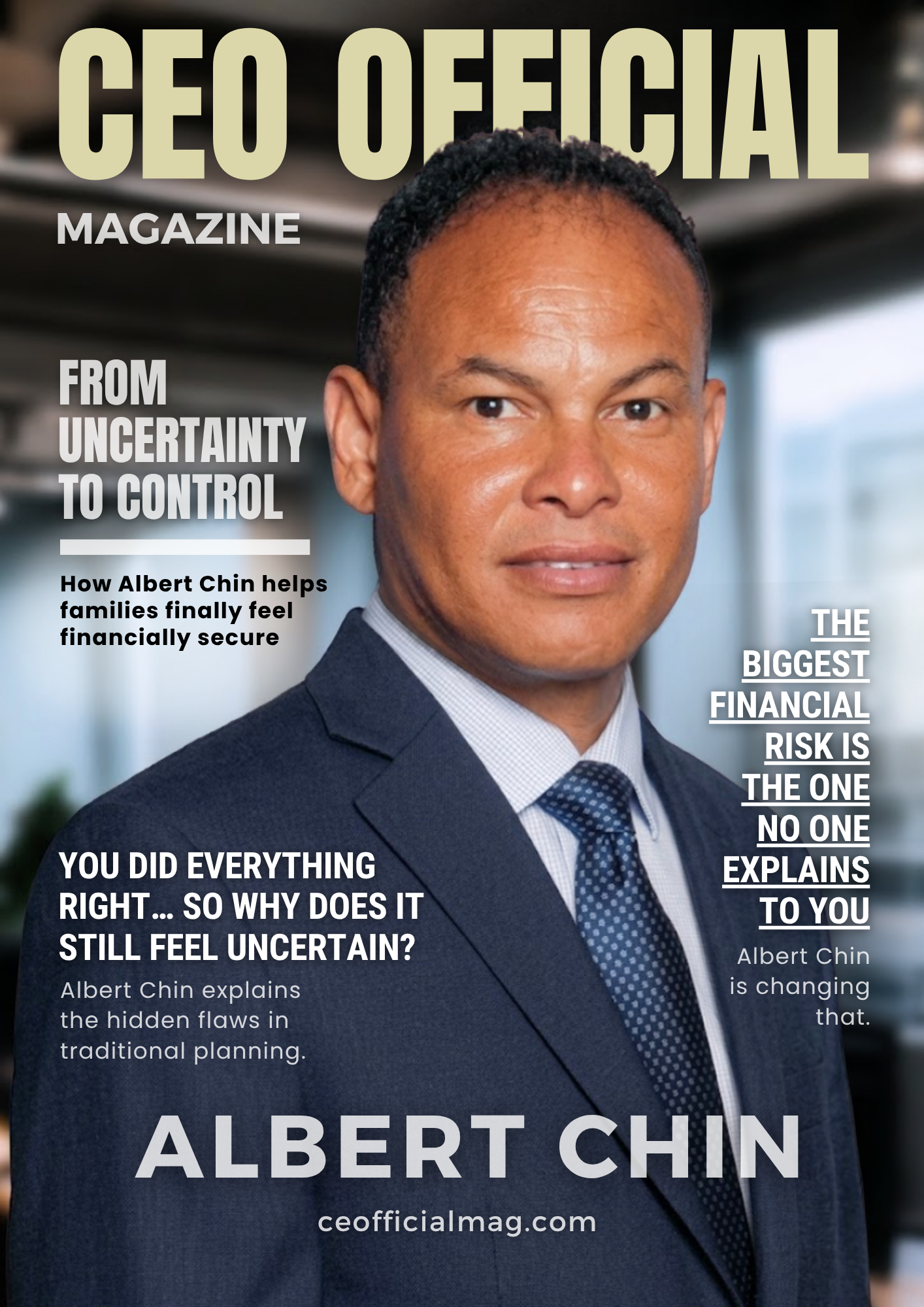
For many people, financial planning starts and stops with what they were told at work, what they heard from a bank, or what has simply become normal in the marketplace. Contribute to a retirement account. Hope the market performs well. Assume taxes will somehow be lower later. Wait until retirement to find out whether the strategy actually worked.
Albert Chin believes that approach leaves too many people exposed.
With a background in electrical engineering and Information Technology, Chin entered the financial services space after recognizing a major gap in financial education, especially when it comes to IRS tax codes and how they can be used to help everyday people create more financial protection. Rather than simply offering products, Chin focuses on education first. His goal is to help clients understand how money really works, how risk quietly affects long-term outcomes, and how the wrong strategy can cost families far more than they realize.
At the center of his philosophy is a simple but powerful idea: people deserve more clarity around the financial decisions that shape their future.
That clarity is a major reason Chin built his business around helping clients better understand strategies related to eliminating risk, fees, and taxes. He believes many individuals and families are doing their best with the information they have, but the problem is that they were never given the full picture. They may be working hard, saving consistently, and contributing to traditional plans, yet still moving toward a future filled with unnecessary uncertainty.
Chin’s work is designed to change that.
A Different Approach to Financial Education
Before entering financial services, Chin’s early entrepreneurial experience in multilevel marketing taught him the importance of relationships, communication, and understanding what people truly need. He learned that trust is not built by talking at people. It is built by listening, simplifying complexity, and helping others feel seen and supported.
A pivotal moment in his personal development came through the Landmark Forum, where he gained a deeper understanding of how language shapes reality. That experience transformed the way he communicates, leads, and serves others. It reinforced his belief that when people are given the right language and the right framework, they can make more empowered decisions in every area of life, especially with money.
That mindset still drives the way Chin serves clients today.
His business is rooted in four core values: integrity, clarity, respect, and appreciation. He believes financial guidance should not feel manipulative, vague, or one-sided. It should feel transparent, understandable, and deeply aligned with what matters most to the client.
Why Traditional Planning Can Fall Short
One of the biggest misconceptions Chin sees is the belief that financial strategies tied to insurance or structured financial products only provide value at death or after a claim. In his view, that is far too narrow.
He helps clients understand that the right financial strategies can create living benefits, protection, liquidity, and more control long before retirement or a future life event. That is especially important in a time when many people are looking for stability, but are still heavily exposed to volatility, taxes, and unnecessary costs.
Many traditional retirement approaches are still built around tax-deferred accumulation. While these methods are common, Chin believes common does not always mean optimal.
The Pitfalls of Traditional Tax-Deferred Strategies
Traditional tax-deferred accounts may look familiar, but familiarity does not guarantee efficiency. Some of the biggest concerns include:
- Future Tax Exposure: Money may grow tax-deferred, but taxes are still due later, often at the time people need those funds the most.
- Market Volatility: Many traditional accounts remain tied to market swings, which can erode value at the wrong time.
- Fees That Compound Against You: Management fees, administrative fees, and fund expenses can quietly reduce long-term growth.
- Restricted Access: Accessing funds too early can come with penalties and limitations, reducing flexibility.
- Uncertain Retirement Outcomes: Growth is never guaranteed, and many people retire unsure whether what they built will truly be enough.
- Limited Control: Most people are participating in plans they were handed, not plans that were built specifically for their goals.
To Chin, the issue is not just that these strategies have weaknesses. It is that many people were never taught to question them in the first place.
Why Tax-Free Strategies Are Getting More Attention
Chin’s educational approach centers on helping clients understand why tax-free strategies deserve a closer look. He believes that when structured properly, these strategies can offer advantages that many traditional approaches do not.
That does not mean every solution fits every person. It does mean people should know their options.
Potential Benefits of Tax-Free Strategies
When appropriate, tax-free strategies may offer advantages such as:
- Tax-Free Growth Potential: Growth can accumulate in a way that may reduce future tax burden.
- Greater Wealth Retention: Keeping more of what you earn and grow can have a significant long-term effect.
- Protection From Market Losses: Certain strategies are designed to protect principal from direct market downside.
- Compounding Without Interruption: Avoiding major losses can help preserve the power of long-term compounding.
- Improved Liquidity and Access: Some structures allow for more flexible access than traditional retirement accounts.
- More Predictability: A properly designed strategy can create a stronger sense of confidence and control.
For Chin, this conversation is about more than mechanics. It is about helping people feel secure. He measures success not just by numbers, but by customer satisfaction and by how confidently clients are able to implement these concepts in their lives.
Solving the Missing Piece
When Chin talks about his impact, he says his work helps clients feel “whole and complete,” like a missing piece has finally been added. That language says a lot about how he views financial guidance.
He is not trying to overwhelm people with jargon. He is trying to solve a problem they have often felt for years but could not fully name: the feeling that they are working hard, yet still not fully protected.
His role is to help clients close that gap.
This is also where his technical background gives him a unique advantage. Chin’s experience in Information Technology and computer systems administration has shaped the way he approaches problem-solving. He values structure, efficiency, and systems that actually work. He brings that same mindset into financial education, helping clients move from confusion to clarity through frameworks that are practical and understandable.
His hobbies also reinforce his professional approach. Stock trading sharpened his ability to think strategically and manage risk. Photography strengthened his attention to detail and perspective. Together, these interests reflect a professional philosophy built on awareness, discipline, and thoughtful decision-making.
Building a Holistic Financial Future
Chin is not focused only on what clients need today. He is building toward a broader future.
Looking ahead, he plans to expand his business into more comprehensive financial services, including investment education and retirement planning. His long-term vision is to create a holistic approach that not only informs people but also inspires them to take proactive steps toward lasting financial independence.
That vision includes understanding each client’s unique situation, staying current on financial products and tools, maintaining transparency, and building strong long-term relationships. He wants clients to feel that they are not receiving a generic recommendation. He wants them to feel supported by a thoughtful strategy that reflects their real goals.
His larger mission over the next five years is to educate and inspire others to become independently wealthy through systems, tools, and structures they can understand and use, including areas such as the stock market, tax codes, and trust entities.
Education First, Empowerment Always
At a time when financial noise is everywhere, Chin believes education is the real differentiator.
People do not need more confusion. They need guidance they can understand. They need someone willing to explain not just what to do, but why it matters. They need someone who values integrity over pressure, clarity over complexity, and long-term impact over short-term transactions.
That is the space Albert Chin is working to fill.
His message is simple: the financial world is bigger than the limited set of options most people have been shown. When individuals and families learn how risk, fees, and taxes affect their future, they are in a better position to make informed, empowered decisions. And when they understand that tax strategy is not just for the wealthy, but for everyday people who want to protect what they have worked hard to build, everything changes.
Financial freedom does not begin with a product. It begins with understanding.
If you are ready to learn how to reduce unnecessary risk, create more control, and explore strategies that may help you keep more of what you earn, click here.